
Surgical access comes first
Established peri-implantitis lesions generally require flap access; non-surgical therapy alone is often insufficient (Periodontol 2000, 2022). The brush is used on the exposed implant threads once the flap is raised.
Brushes and tips used on implant surfaces in peri-implantitis surgery differ in bristle or tip material, structure and drive, so the word “brush” alone does not tell you what an instrument does to the surface. The NiTi Brush from HANS Korea is a rotary titanium brush‡ with nickel-titanium shape-memory bristles, designed for mechanical debridement and polishing of the exposed implant surface while the thread geometry of the implant is preserved. The published randomised trials that name it did not compare decontamination instruments, so HANS Korea makes no claim of clinical equivalence or superiority. Whether and how it can be used in a given case — access, visibility, the defect, the prosthesis — is decided by the treating clinician.
The surface of an implant has two scales: the micro-roughness given to it for osseointegration, and the macro-geometry of the threads. Treating one is not the same as changing the other.
| Term | Meaning on this page |
|---|---|
| Surface-layer treatment | Mechanical debridement and polishing of the contaminated layer on the exposed, roughened micro-surface. With the NiTi Brush the contaminated layer is removed and the implant surface left cleaner and smoother†. |
| Preserving the thread macro-geometry | The outline and helix of the implant threads are not cut away. The NiTi Brush bristles bend into the thread valley and follow its contour instead of cutting across it. |
| Implantoplasty | A separate surgical procedure in which the exposed threads are reshaped with burs to remove the roughened surface; it deliberately removes implant material. Several published protocols combine it with brushing of the intrabony part of the implant. |
| Surface decontamination | A treatment goal: the physical removal of biofilm, calculus and other deposits from the implant surface. It is one step of surgical therapy, usually combined with a chemical or electrolytic step and with grafting, and not the whole treatment. |
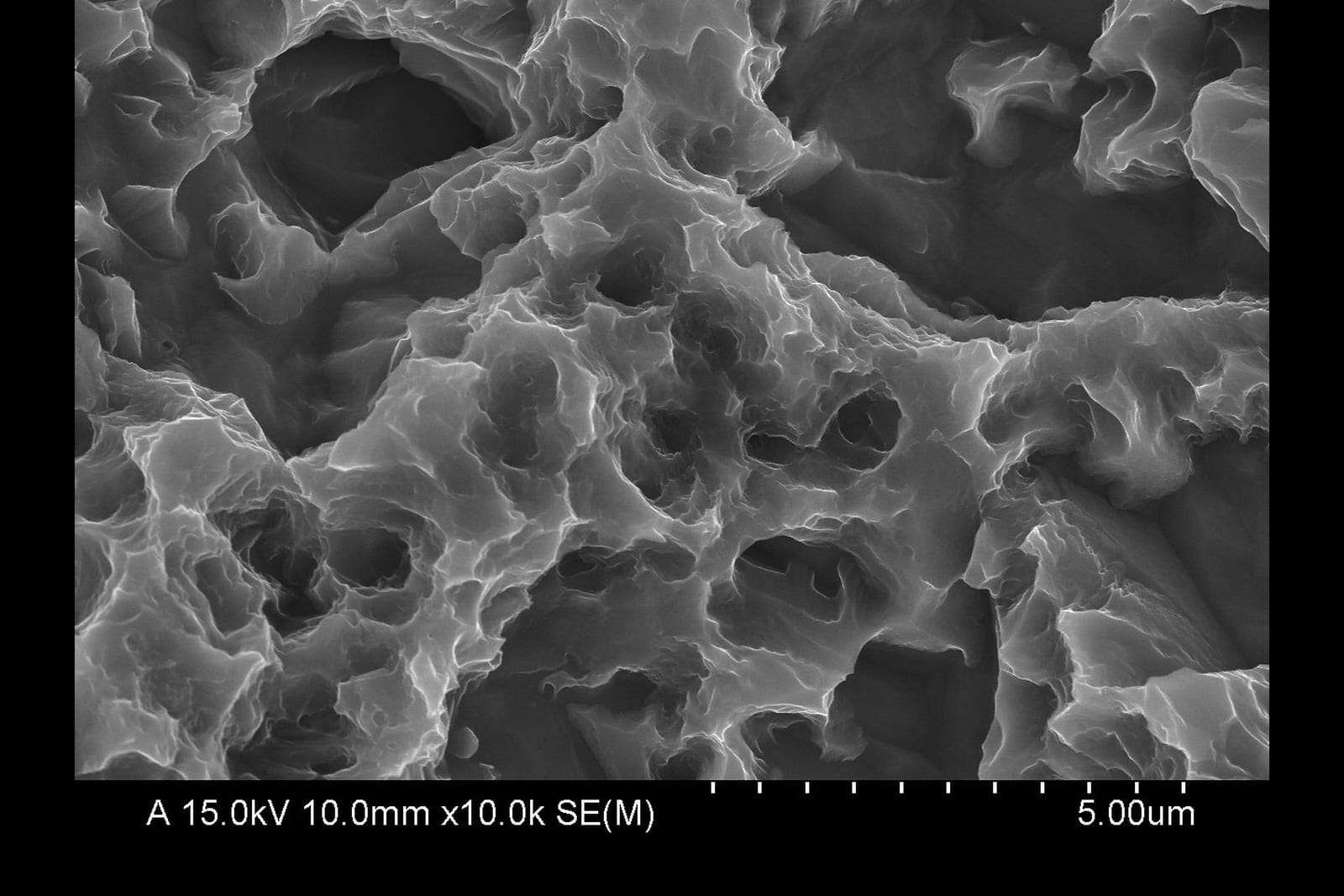
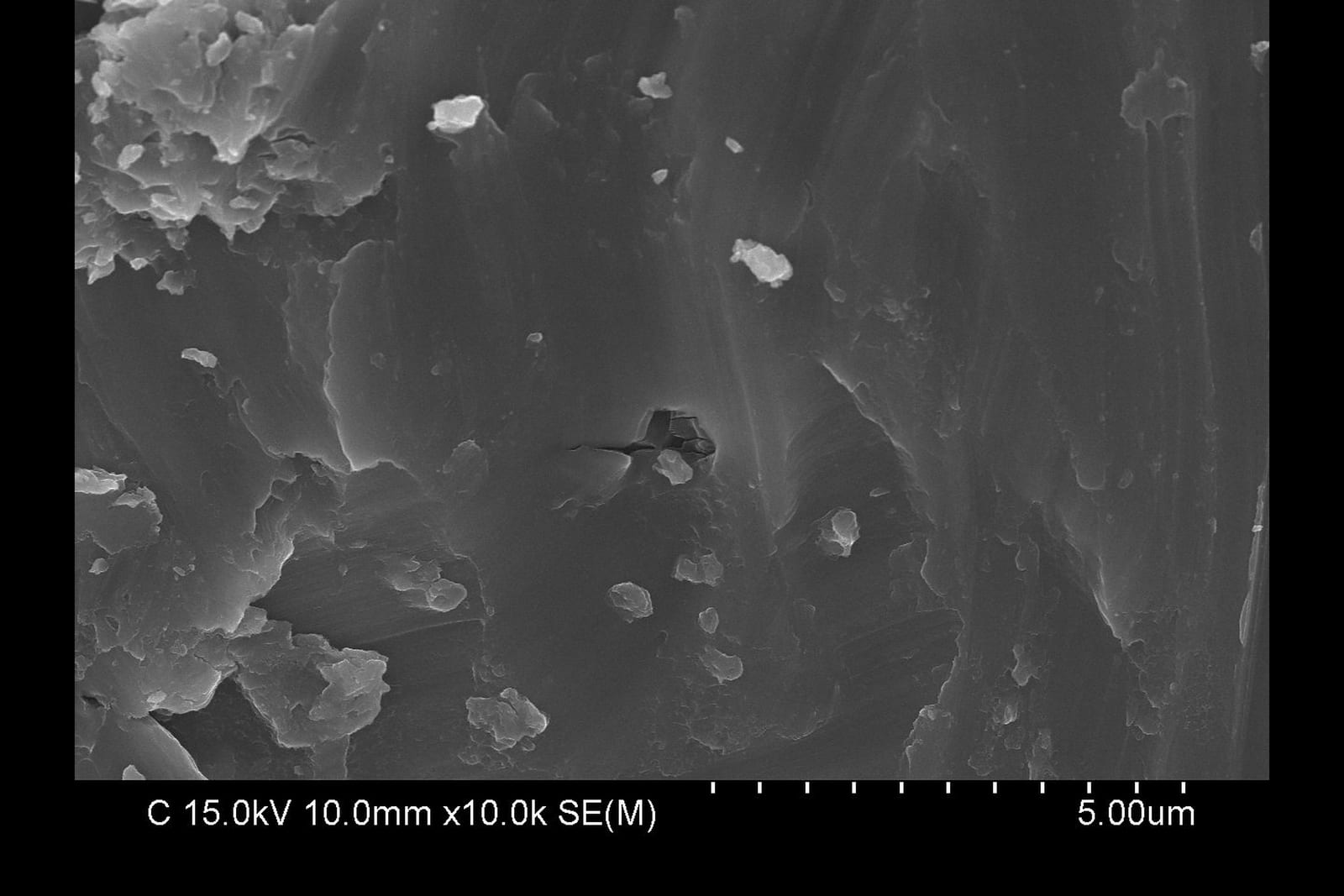
More before-and-after images, including 24 removed implants, are on the lab test page.
The table below is a framework for reading any manufacturer’s documentation. It names no products and makes no statement about how any type performs; the answers belong in each manufacturer’s specification, Instructions for Use and the studies that name the device.
| Design type | What to check about material and structure | Questions a clinician can ask |
|---|---|---|
| Rotary brush with metal-wire bristles | Bristle alloy (for example nickel-titanium or titanium), wire diameter, how the bristles are fixed, head shape, shaft length | Is it intended to debride and polish the surface layer, or only to remove deposits? Which drive, reduction ratio and speed does the IFU specify? Single use or reusable? |
| Brush with non-metal fibres | Fibre material, how the working end is driven, shape of the working end | Is it intended for non-surgical use, for use during surgery, or both? What does the manufacturer say it does to the implant surface? |
| Ultrasonic or oscillating tip | Tip material (metal or polymer), tip shape, power setting | How does the tip contact the thread profile, and which areas can it reach? Which settings does the IFU specify? |
| Burs and polishers for implantoplasty | Bur material and shape, the sequence of burs and polishers | Is the aim to reshape the threads (implantoplasty) rather than treat the surface layer? Which part of the implant is it intended for? |
For every type, two questions are the same: does a published study name this device, and is there an Instructions for Use document in your language? The ten-point titanium brush checklist sets these out, with the NiTi Brush’s answer to each.
Each statement about the NiTi Brush below is labelled with the kind of evidence behind it: Specification / IFU (what the manufacturer specifies), Laboratory (bench tests on discs or removed implants) or Clinical (studies in patients).
| Statement about the NiTi Brush | Level | Where to check |
|---|---|---|
| Intended use, as stated by the manufacturer: “mechanical debridement and cleaning of the titanium dental implant surface contaminated by osseous defect of plaque, calculus or any other foreign body materials resulting from peri-implantitis”. | Specification / IFU | Product · IFU |
| Bristles of nickel-titanium shape-memory alloy wire, about 0.095 mm in diameter; modulus of elasticity 28–41 GPa (titanium: 115 GPa) at a Vickers hardness of 303–362. | Specification / IFU | Raw material |
| Driven by an implant motor through a 20:1 reduction handpiece at 600–1,200 rpm with extensive external sterile saline irrigation; not for a high-speed turbine or a straight handpiece. | Specification / IFU | Product · IFU |
| Four head geometries on the same shaft diameter: NANO (pointed, bound), POCKET (open), POCKET SHORT (open, short shaft, for posterior sites) and OMEGA (wide, splayed). | Specification / IFU | Product |
| Single use; supplied non-sterile and autoclaved at 134 °C for 15 minutes before use. IFU document HKIFU-001, Rev. 07, 22 May 2023. | Specification / IFU | IFU |
| Twenty-four failed implants removed from patients were debrided with the NiTi Brush on the bench; under SEM at ×10,000 the contaminated deposits seen before brushing were removed while the thread geometry was preserved. | Laboratory (HANS Korea test) | Lab test |
| On clean RBM and SLA titanium discs, brushing reduced surface roughness (Ra 1.43 to 1.15 µm on RBM, 2.85 to 2.23 µm on SLA). | Laboratory | Oral Biol Res 2016 |
| In a 3D-printed intrabony defect model with a multispecies biofilm, no protocol tested, including those with the brush, removed the biofilm completely. | Laboratory | Clin Oral Implants Res 2023 |
| The brush releases titanium: on moderately roughened titanium discs the NiTi Brush OMEGA released 6.45 ± 2.03 µg, mean particle size 1.05 ± 0.11 µm. We do not claim that it releases none. | Laboratory | Dent J 2024 · Raw material |
| Used as the mechanical decontamination step in published randomised controlled trials of peri-implantitis therapy, for example “at 600 rpm for approximately 2–3 min” or at ≤ 1,200 rpm under continuous irrigation. | Clinical | Clin Implant Dent Relat Res 2025 · Clin Oral Implants Res 2022 |
As of Revision 2, 12 October 2026, HANS Korea counts 34 verified publications. A paper is counted only when it has been read in full, verified against the publisher’s record, and names the instrument as the NiTi Brush of HANS Korea in its text or figures, under its current name, its former name I.C.T. (Implant Cleaning Technique), or the name used by HANS Korea’s United States distributor. Papers reporting merely “a titanium brush” are excluded. The 34 are nine randomised-controlled-trial publications and one quasi-randomised controlled trial, nine clinical studies (a retrospective cohort, retrospective analyses, case series and case reports), eleven translational and laboratory studies, and four reviews.
The 34 publications are not 34 trials comparing the NiTi Brush with another instrument. In the randomised trials listed, the NiTi Brush was the mechanical decontamination step of the surgical therapy, common to all study arms except in one trial, where it was used in the flap-surgery arm; the trials evaluated other measures — bone substitutes, membranes, adjuncts — and did not compare decontamination instruments.
The number of trial publications is also larger than the number of separate trials: the nine randomised-trial publications include a 3-year report of one trial and a single-centre report of another, and the patient and implant totals count each cohort once.
Every paper, with its DOI, is on the literature page; the counting rules and the per-study table are on the summary page.
Established peri-implantitis lesions generally require flap access; non-surgical therapy alone is often insufficient (Periodontol 2000, 2022). The brush is used on the exposed implant threads once the flap is raised.
Where a fixed bridge connects several implants, removing one implant means dismantling the whole restoration. If access and visibility are sufficient, debridement of that implant can be planned; whether the prosthesis is removed or adjusted is the treating clinician’s decision. One full-length case in the clinical videos (“Save the crown”) shows treatment without removing the prosthesis; it is one case, not a guarantee.
NANO is the model for an initial lesion with almost no space; POCKET SHORT is for molars, narrow posterior sites and limited mouth opening. Where one brush is used on several implants in the same patient, it is immersed in 3 % hydrogen peroxide and rinsed with sterile saline before the next implant.
The brush is one step of surgical therapy and is not a cure on its own. It is used within the surgical procedure — flap access, removal of granulation tissue, the reconstructive therapy chosen for the defect — and does not replace any of those steps. Chemical adjuncts and regeneration are described in the published protocols summarised on the chemical adjuncts page; the agent and the protocol are a clinical decision, and this page is not a treatment guideline.
The Instructions for Use are the binding reference. For patients who report a reaction to titanium or nickel, see the IFU.
No. Brushes and tips for implant surfaces differ in material, in the structure of the bristles or tip, in how they are driven and in what they are intended to do on the surface. A generic name such as titanium brush or implant brush does not tell you which of these applies. Check the specification, the Instructions for Use and the published studies that name the device.
No. The NiTi Brush is a rotary brush designed for mechanical debridement and polishing of the exposed implant surface while the thread geometry is preserved. Implantoplasty is a separate surgical procedure in which the exposed threads are reshaped with burs to remove the roughened surface. Several published protocols combine the two.
That cannot be concluded without trials that compare the instruments directly, and HANS Korea makes no claim of equivalence or superiority. In the published randomised trials that name the NiTi Brush, it was the mechanical step common to all study arms except in one trial, where it was used in one arm only, and the trials did not compare decontamination instruments. Each device should be judged on the studies that name it.
That depends on whether the brush can reach the exposed implant surface and the operator can see it. One case treated without removing the prosthesis is shown in the clinical videos, but this cannot be guaranteed for every case. Whether a prosthesis is removed or adjusted is decided case by case by the treating clinician.
HANS Korea is not the publisher of the works cited on this page and has no commercial relationship with them. Citations link to the publisher’s DOI record. See the legal notice.
† Smooth refers to moderately rough implant surfaces (e.g. SLA, RBM). In laboratory studies with the NiTi Brush, surface micro-roughness was reduced by removing protrusions (Kim et al. 2016) and the sharp-edged microstructure was smoothed, brushing continuing until the surface looked uniformly smooth and shiny, as in clinical use (Brunello et al. 2025). A clinical review describes polishing the exposed rough implant surface to a smooth surface with the NiTi Brush (Hiroyasu 2018). The shine seen chairside is the visible sign of this change (HANS Korea performance test).
‡ Titanium brush (Ti brush) is used on this site as a generic, descriptive term, as in the literature; it is not a product name. Investigators have described the NiTi Brush by HANS Korea in this way, for example “a rotating titanium brush (Nano NiTi Brush, HANS KOREA CO. Ltd)” in randomised trials (Derks et al. 2022; Regidor et al. 2023; Alibegovic et al. 2025; Regidor et al. 2026) and “a titanium brush (Hans Korea Co., Ltd.)” in clinical studies (Galarraga-Vinueza et al. 2020; Schwarz et al. 2023; Zhou et al. 2026; Dionigi et al. 2025; Babgi & Felemban 2024); a laboratory study abbreviates it “TiB” (Ichioka et al. 2023). Another laboratory study calls it a “Ti brush” (“NiTi Brush Omega, Hans Korea”; Kao et al. 2024). The bristles are a nickel-titanium (NiTi) alloy, not pure titanium; for patients who report a reaction to titanium or nickel, see the IFU.