
This page is written for dentists and periodontists. It sets out an example sequence for the surgical treatment of peri-implantitis in which the exposed implant surface is decontaminated mechanically with a rotary titanium brush‡ — the NiTi Brush, whose bristles are a nickel-titanium shape-memory alloy — driven by an implant motor at 600–1,200 rpm.
Established peri-implantitis lesions generally require flap access; non-surgical therapy alone is often insufficient.1 Once the flap is raised, the question is how to decontaminate the implant surface before any chemical or reconstructive step. The answer below follows the published treatment protocol, the clinical FAQ and the Instructions for Use. For the background on the disease itself, see Peri-implantitis.
Why the implant surface decides the result
Modern dental implants are deliberately given a roughened surface, because roughness improves osseointegration. Once that surface is exposed, bacterial biofilm anchors into the micro-topography and into the thread profile, where neither instrumentation designed for smooth root surfaces nor irrigation alone can reliably reach it.
This is why the decontamination step, rather than the regenerative material, is often what decides the result of surgical therapy. When a chemical adjunct or a reconstructive material is evaluated, the trial design places it alongside mechanical instrumentation, not instead of it. In one randomised trial the protocol specified surface decontamination “by means of NiTi brushes for about 2–3 min at 600 rpm” before the adjunct was applied.2
The protocol in six steps example of protocol
An example protocol only, not a substitute for the IFU. It is published by HANS Korea for orientation; treatment decisions remain with the treating clinician. Always read the IFU applicable to your market before treatment.
-
Diagnosis
Diagnose peri-implantitis and measure the depth of the pocket.
-
Select the brush for the case
NANO for 1–2 threads exposed · POCKET for more than 2 threads · POCKET SHORT for molars · OMEGA for deep pocket involvement.
-
Sterilise before use
The NiTi Brush is supplied non-sterile. Sterilise before every use in a sterile pouch by autoclave at 134 °C for 15 minutes.
-
Rotate the brush — debridement and decontamination
Use an implant motor with a 20:1 reduction handpiece at 600–1,200 rpm, with extensive external sterile saline irrigation. Debride the contaminated implant surface and remove granulation tissue from the implant surface and the surrounding tissue in the same step.
-
Chemical treatment — after brushing
As reported in the literature (clinician’s choice): a tetracycline-HCl solution on the debrided surface, for example one 250 mg capsule dissolved in 5 mL saline.3,4,5 The agent and the protocol are a clinical decision.
-
GBR — after chemical treatment
Guided bone regeneration follows the decontamination and chemical steps. Refer to the literature for the reconstructive protocol.
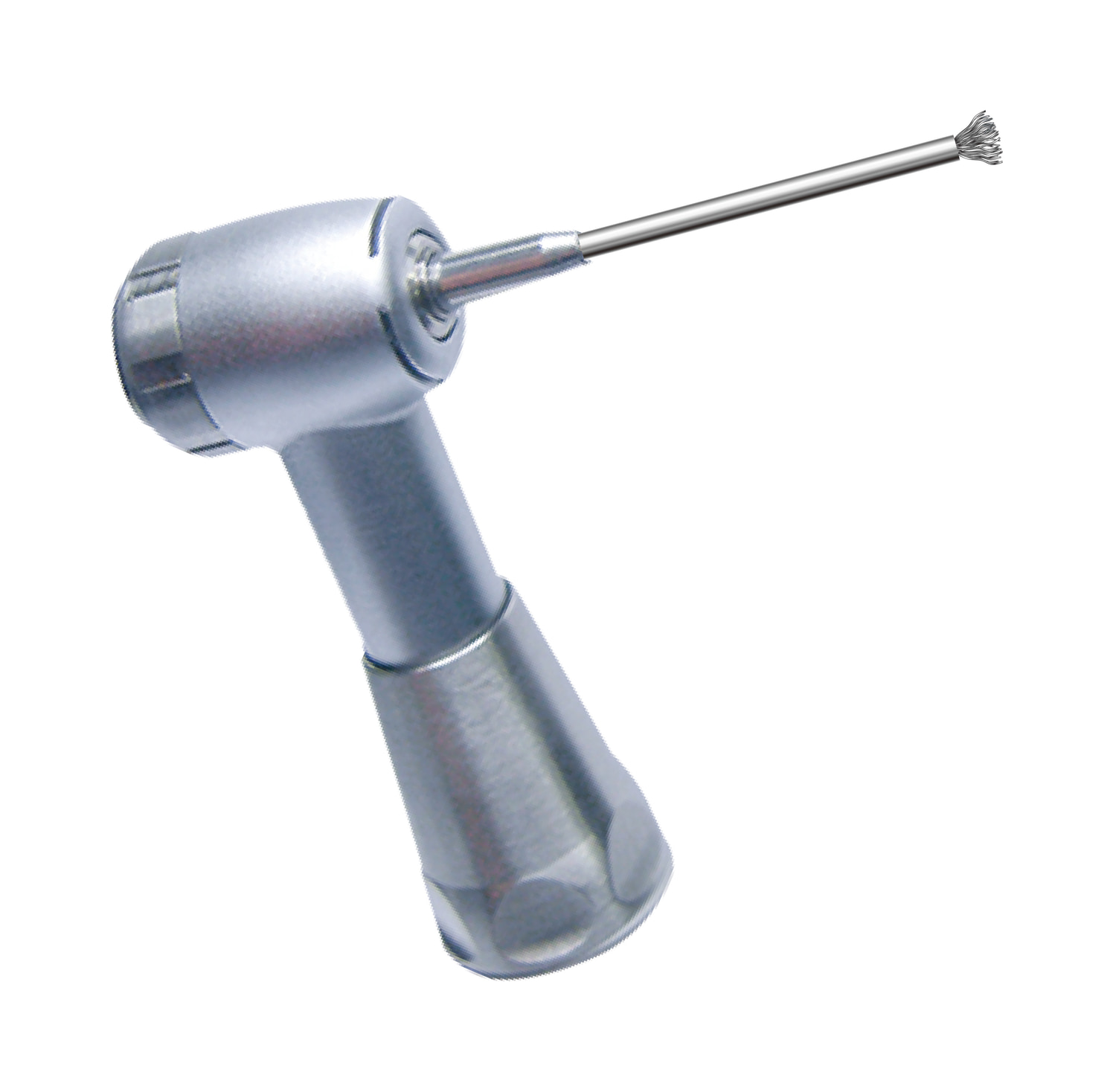
How to use the titanium brush: speed, handpiece and time
| Drive | Implant motor |
|---|---|
| Handpiece | 20:1 reduction handpiece |
| Speed | 600–1,200 rpm |
| Irrigation | Extensive external sterile saline during brushing |
| Brushing time | About 2–3 minutes at 600 rpm per implant, as reported in published clinical studies;2,6 it depends on the defect and the surface |
| Sterility | Supplied non-sterile — sterile pouch, autoclave at 134 °C for 15 minutes before every use |
| Use | Single use: one brush per patient, per procedure. Do not reprocess or reuse. |
Use an implant motor
The NiTi Brush is not intended for a high-speed turbine, a straight handpiece, or any handpiece that cannot hold this speed range. Refer to the Instructions for Use for the complete procedure.
The endpoint is visual rather than timed
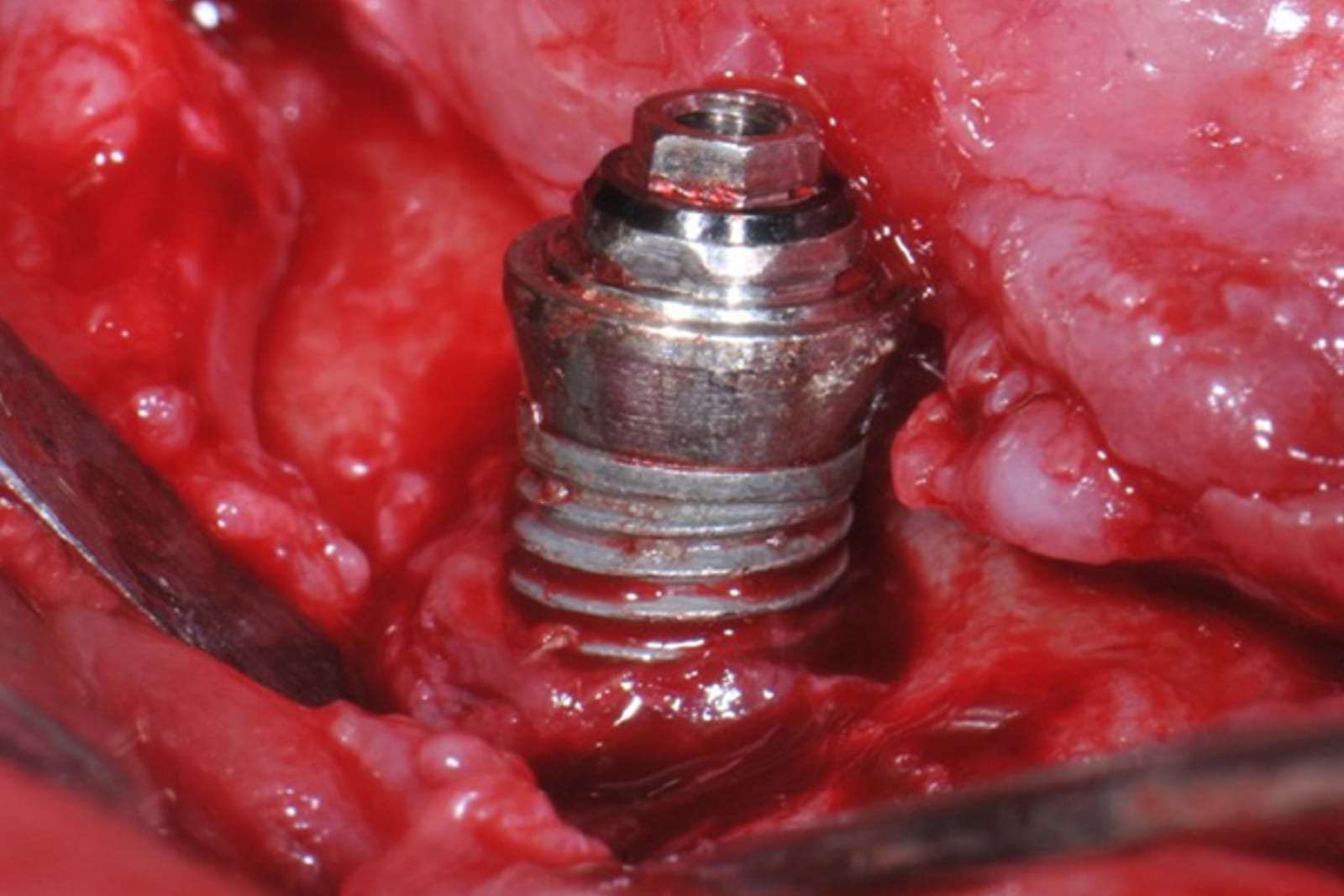
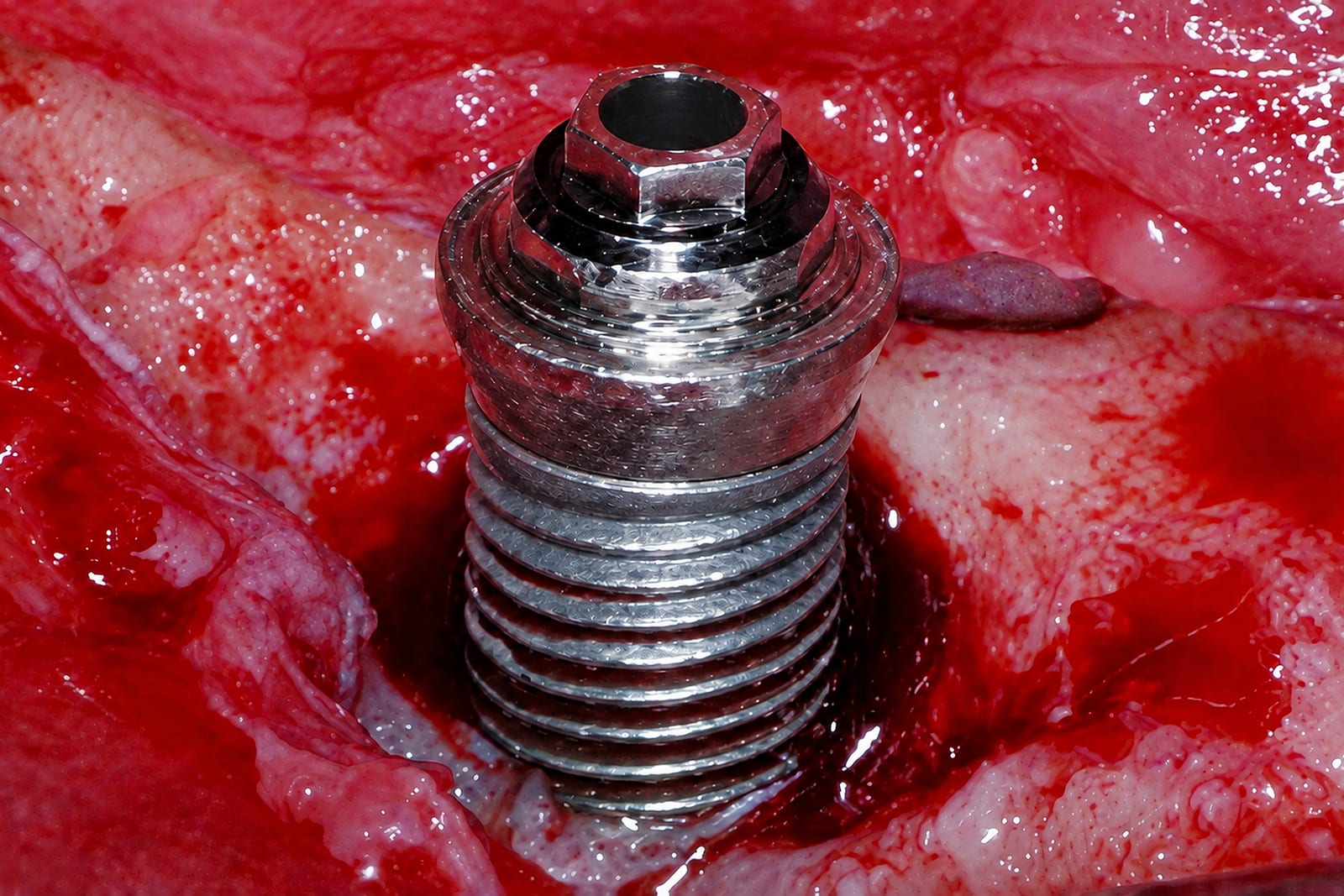
During brushing the shade of the implant surface changes: the dull, contaminated appearance gives way to a bright, smooth† metal surface. Stop when the implant surface is bright and shiny (HANS Korea performance test). Under scanning electron microscopy at ×10,000, the contaminated deposits seen before brushing are removed while the thread geometry is preserved.
Choosing the brush for the defect
The four models share the same shank, so any of them mounts in the same handpiece. The choice follows how much of the implant is exposed and how much room there is to work.
| Model | Bristle head | Typical case |
|---|---|---|
| NANO | Pointed, bound | Initial stage, 1–2 threads exposed, almost no space |
| Open | The standard model, more than 2 threads exposed | |
| POCKET SHORT | Open, short shaft | Molars, narrow posterior sites, limited mouth opening |
| OMEGA | Wide, splayed | Deep pocket involvement |
Watch the protocol
NiTi Brush for peri-implantitis — clinical protocol in 6 steps · 1:00 · English
An example only, not a substitute for the IFU. Watch on YouTube → · All clinical videos
After brushing: chemical step and GBR
The agent and the protocol after brushing are a clinical decision. As reported in the literature:
- A tetracycline-HCl solution applied to the debrided surface, e.g. one 250 mg capsule dissolved in 5 mL saline (50 mg/mL) for up to 5 minutes.3
- This concentration did not alter SLA surface microstructure in vitro.4
- In a recent controlled trial, tetracycline hydrochloride was applied for 2 minutes after 3% hydrogen peroxide.5
- Other agents (for example minocycline) are also described in the literature.
Please refer to the published literature rather than treating this example as a recommendation. Guided bone regeneration follows the decontamination and chemical steps.
References
- Montero E, Roccuzzo A, Molina A, Monje A, Herrera D, Roccuzzo M. Minimal invasiveness in the reconstructive treatment of peri-implantitis defects. Periodontology 2000 2022. DOI: 10.1111/prd.12460
- Monje A, Pons R, Vilarrasa J, Nart J, Wang H-L. Significance of barrier membrane on the reconstructive therapy of peri-implantitis: a randomised controlled trial. Journal of Periodontology 2023. DOI: 10.1002/JPER.22-0511
- Suh et al. 2003. DOI: 10.1097/01.id.0000091139.04246.bc
- Seo et al. 2007. DOI: 10.5051/jkape.2007.37.2.251
- Monje A, Pons R, Aparicio C, Tarnow D, Rosen PS, Nart J. Clinical Implant Dentistry and Related Research 2026;28:e70144. DOI: 10.1111/cid.70144
- Monje A, Navarro-Mesa S, Soldini C, Zappalá G, Peña P, Navarro JM Sr, Pons R. Surface decontamination on the reconstructive therapy of peri-implantitis: a multicenter randomized clinical trial. Clin Implant Dent Relat Res 2025;27(4). DOI: 10.1111/cid.70075
HANS Korea is not the publisher of these works and has no commercial relationship with them. See the legal notice.
Note on “smooth”
† Smooth refers to moderately rough implant surfaces (e.g. SLA, RBM). In laboratory studies with the NiTi Brush, surface micro-roughness was reduced by removing protrusions (Kim et al. 2016) and the sharp-edged microstructure was smoothed, brushing continuing until the surface looked uniformly smooth and shiny, as in clinical use (Brunello et al. 2025). A clinical review describes polishing the exposed rough implant surface to a smooth surface with the NiTi Brush (Hiroyasu 2018). The shine seen chairside is the visible sign of this change (HANS Korea performance test).
Note on “titanium brush”
‡ Titanium brush (Ti brush) is used on this site as a generic, descriptive term, as in the literature; it is not a product name. Investigators have described the NiTi Brush by HANS Korea in this way, for example “a rotating titanium brush (Nano NiTi Brush, HANS KOREA CO. Ltd)” in randomised trials (Derks et al. 2022; Regidor et al. 2023; Alibegovic et al. 2025; Regidor et al. 2026) and “a titanium brush (Hans Korea Co., Ltd.)” in clinical studies (Galarraga-Vinueza et al. 2020; Schwarz et al. 2023; Zhou et al. 2026; Dionigi et al. 2025; Babgi & Felemban 2024); a laboratory study abbreviates it “TiB” (Ichioka et al. 2023). Another laboratory study calls it a “Ti brush” (“NiTi Brush Omega, Hans Korea”; Kao et al. 2024). The bristles are a nickel-titanium (NiTi) alloy, not pure titanium; for patients who report a reaction to titanium or nickel, see the IFU.