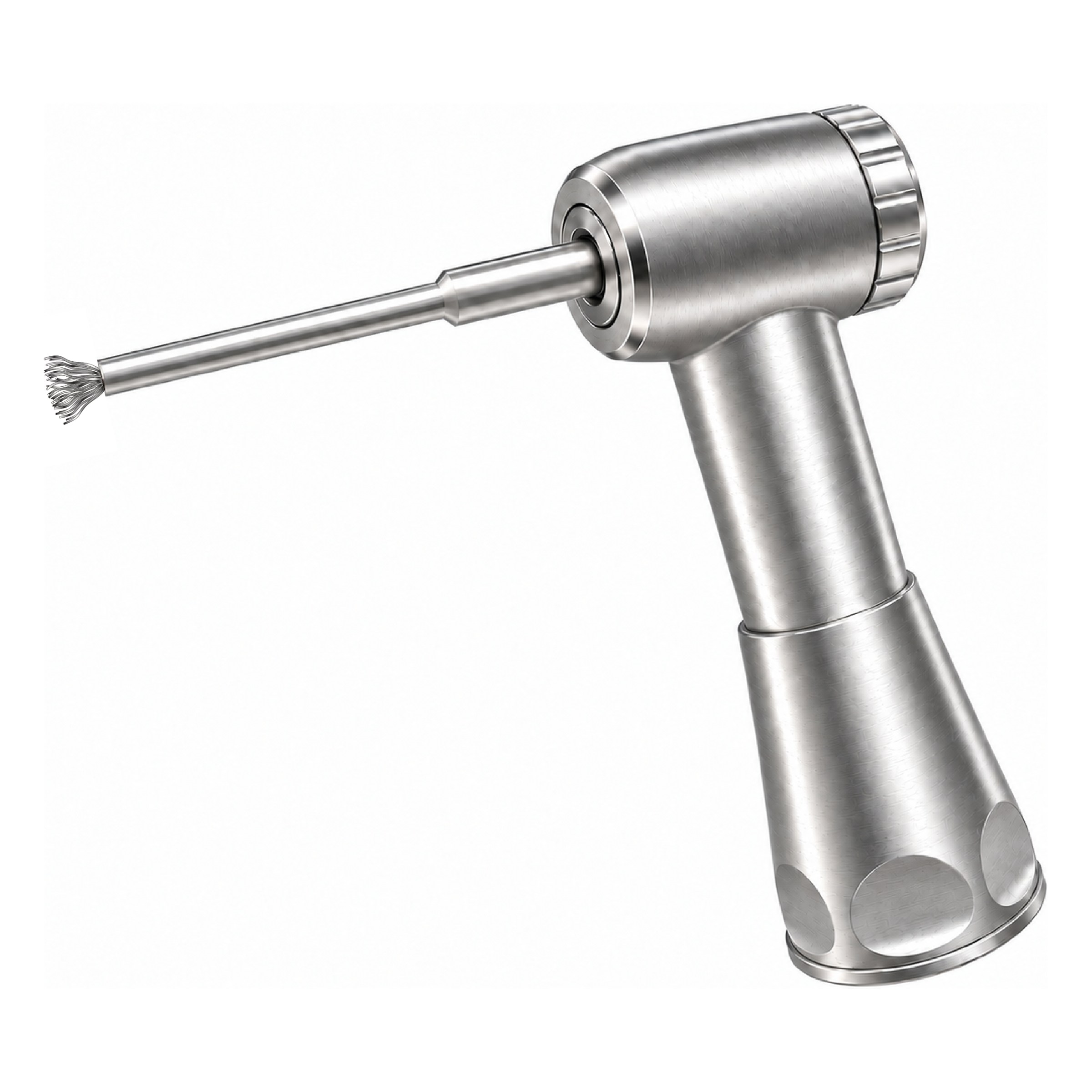
Titanium brush for peri-implantitis

A titanium brush for peri-implantitis (also written peri implantitis brush, periimplantitis brush or Ti brush) is a small rotary brush that a dentist runs over the exposed threads of a dental implant to remove the biofilm and deposits that keep peri-implantitis going. It is driven by the implant motor, at low speed, under saline irrigation, once the gum has been opened to reach the implant surface. This page explains the instrument in plain terms and shows the NiTi Brush, the nickel-titanium version made by HANS Korea since 2010.

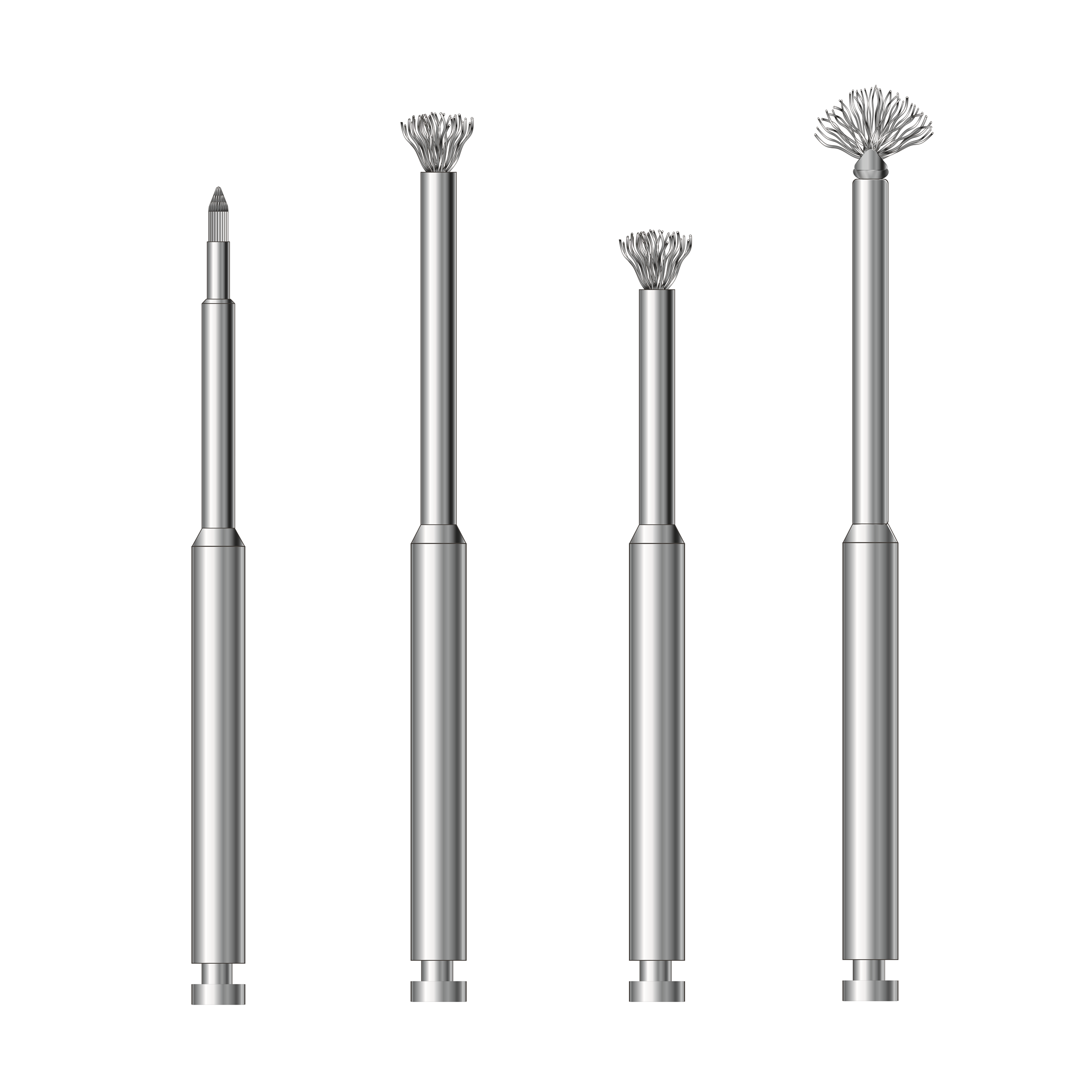
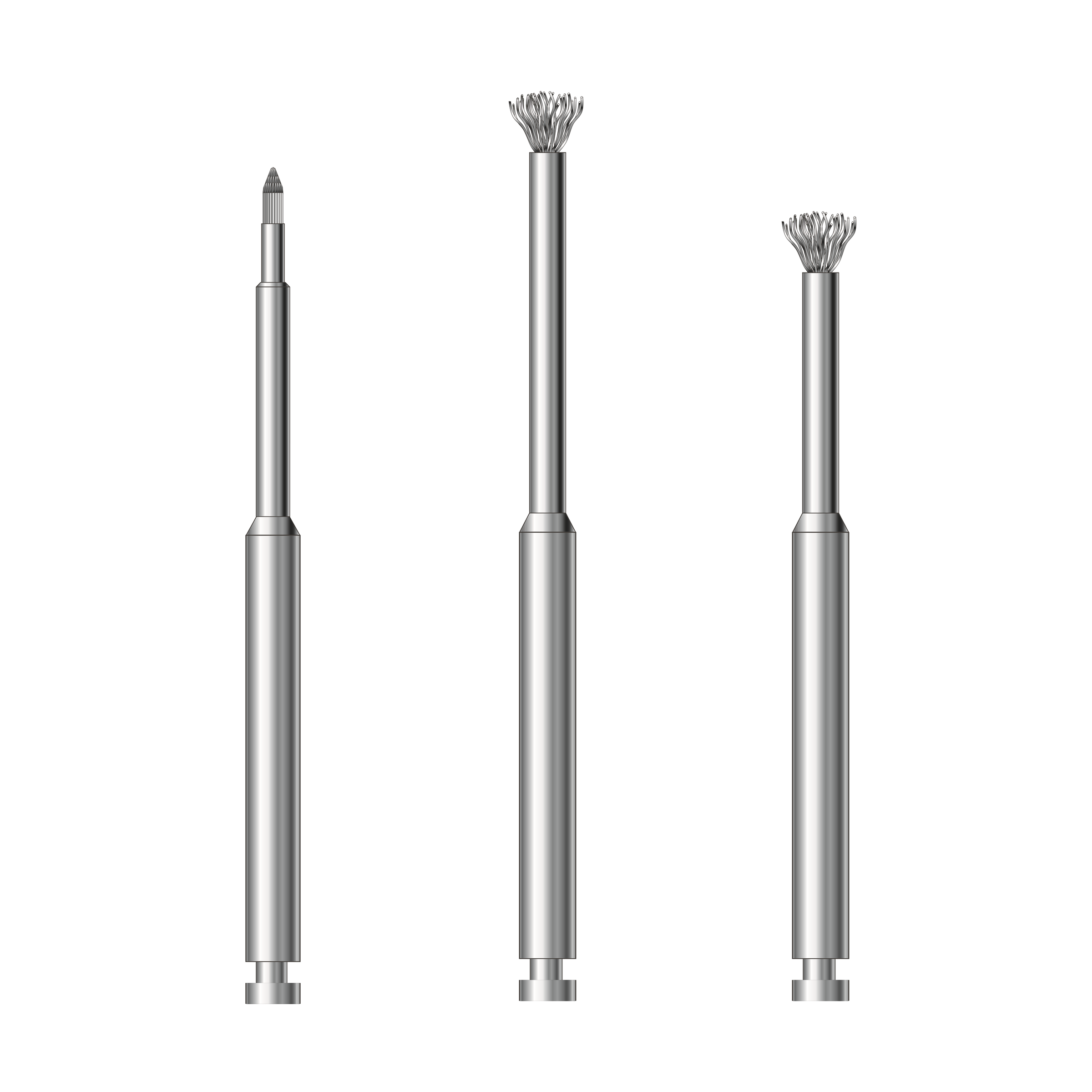
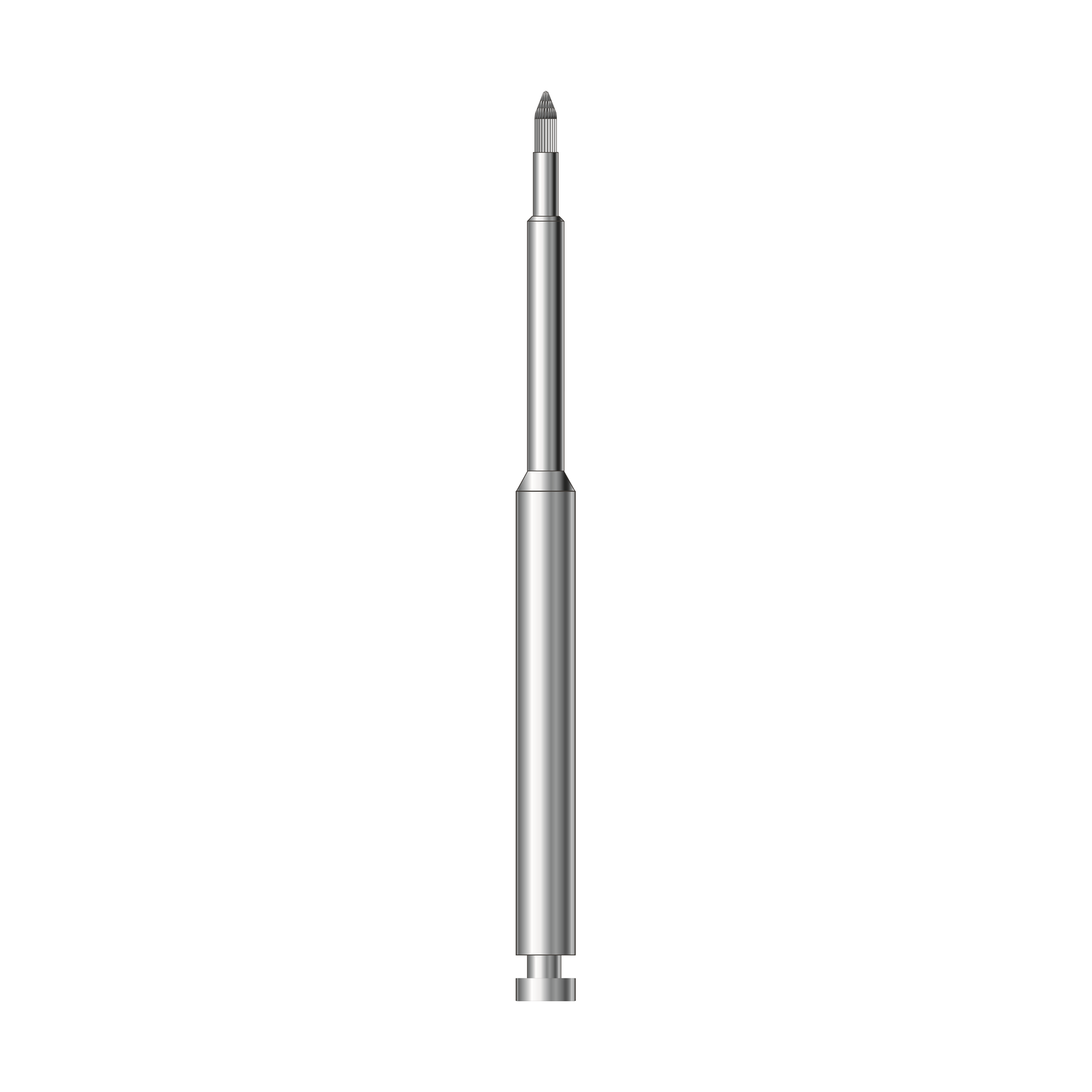
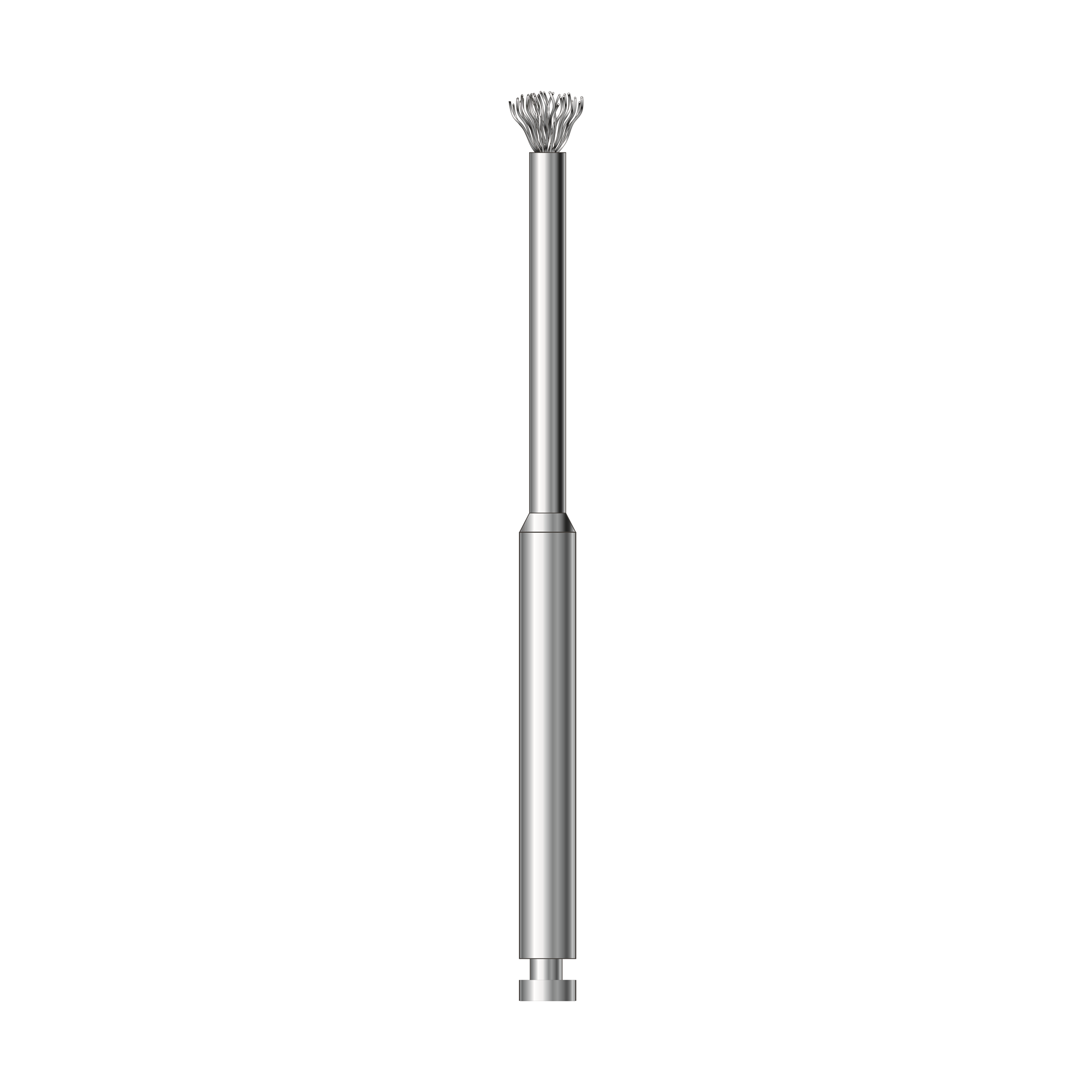
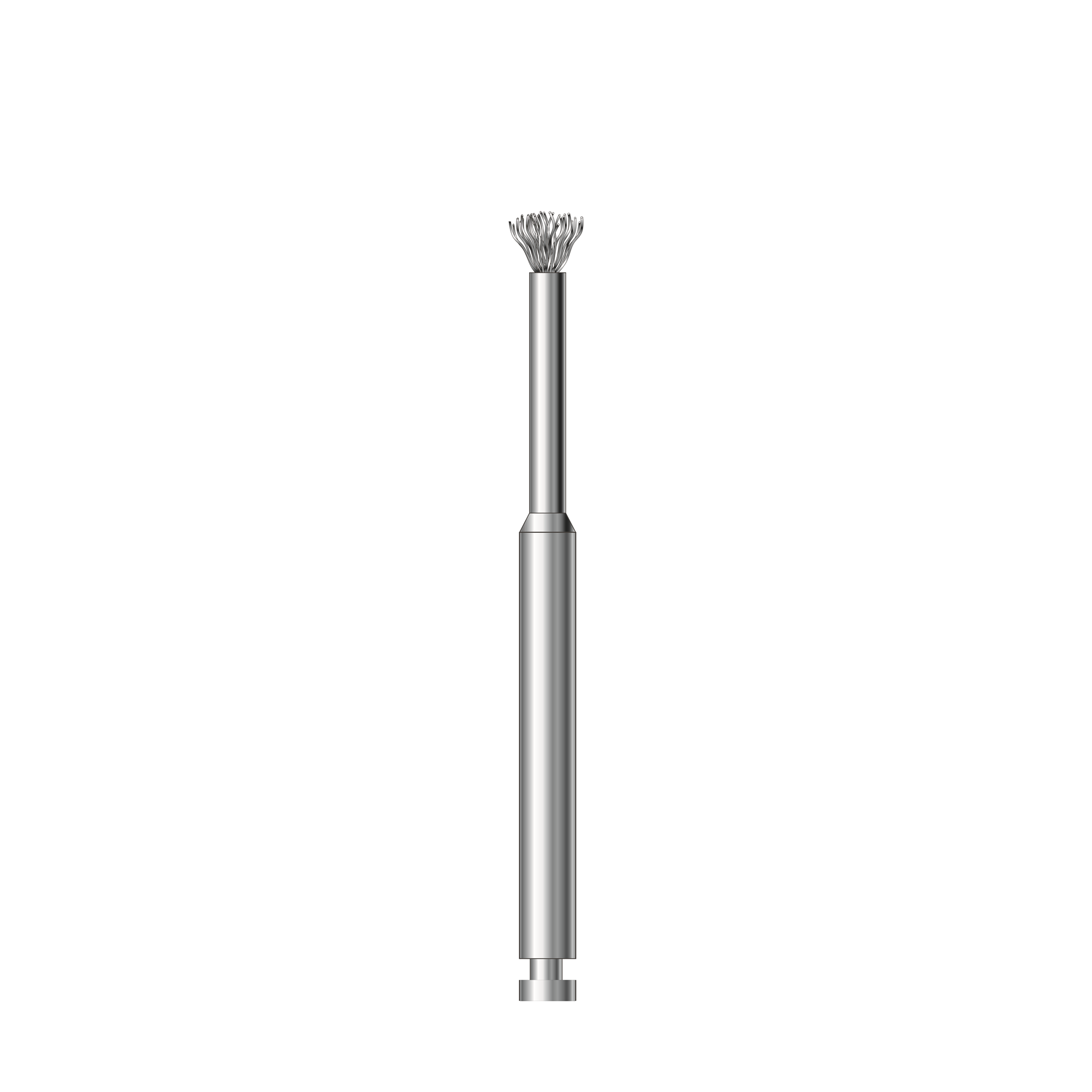
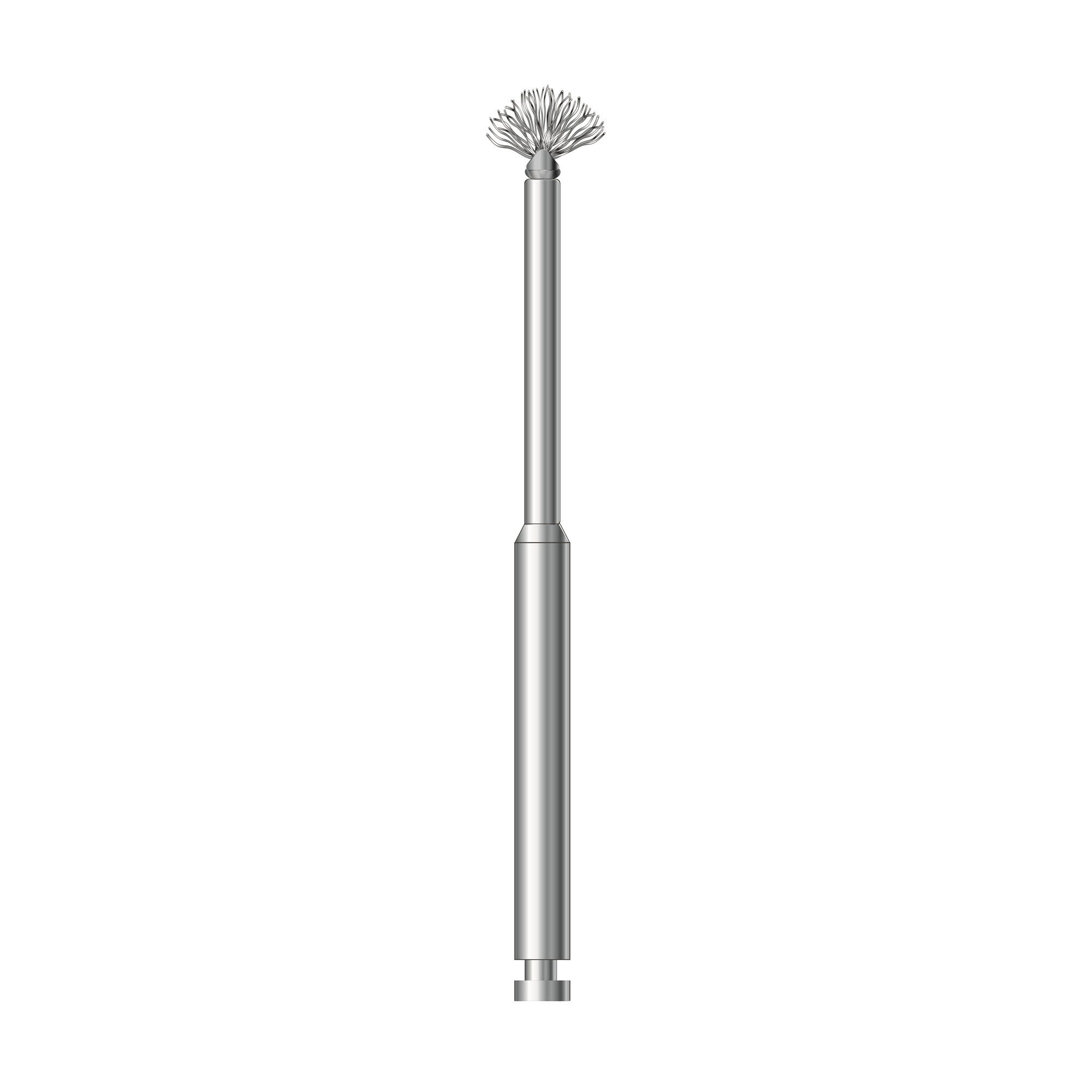
Titanium brush for peri-implantitis: the NiTi Brush NANO, POCKET, POCKET SHORT and OMEGA models at the same scale, by HANS Korea
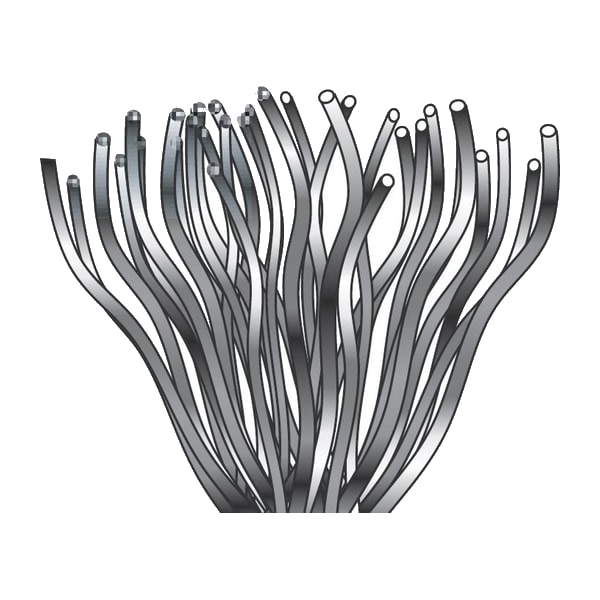
The NiTi Brush NANO, POCKET, POCKET SHORT and OMEGA at the same scale. The bristles are nickel-titanium, a shape-memory titanium alloy; the head geometry, and for POCKET SHORT the shaft length, is what changes.

Why a brush, and why titanium alloy

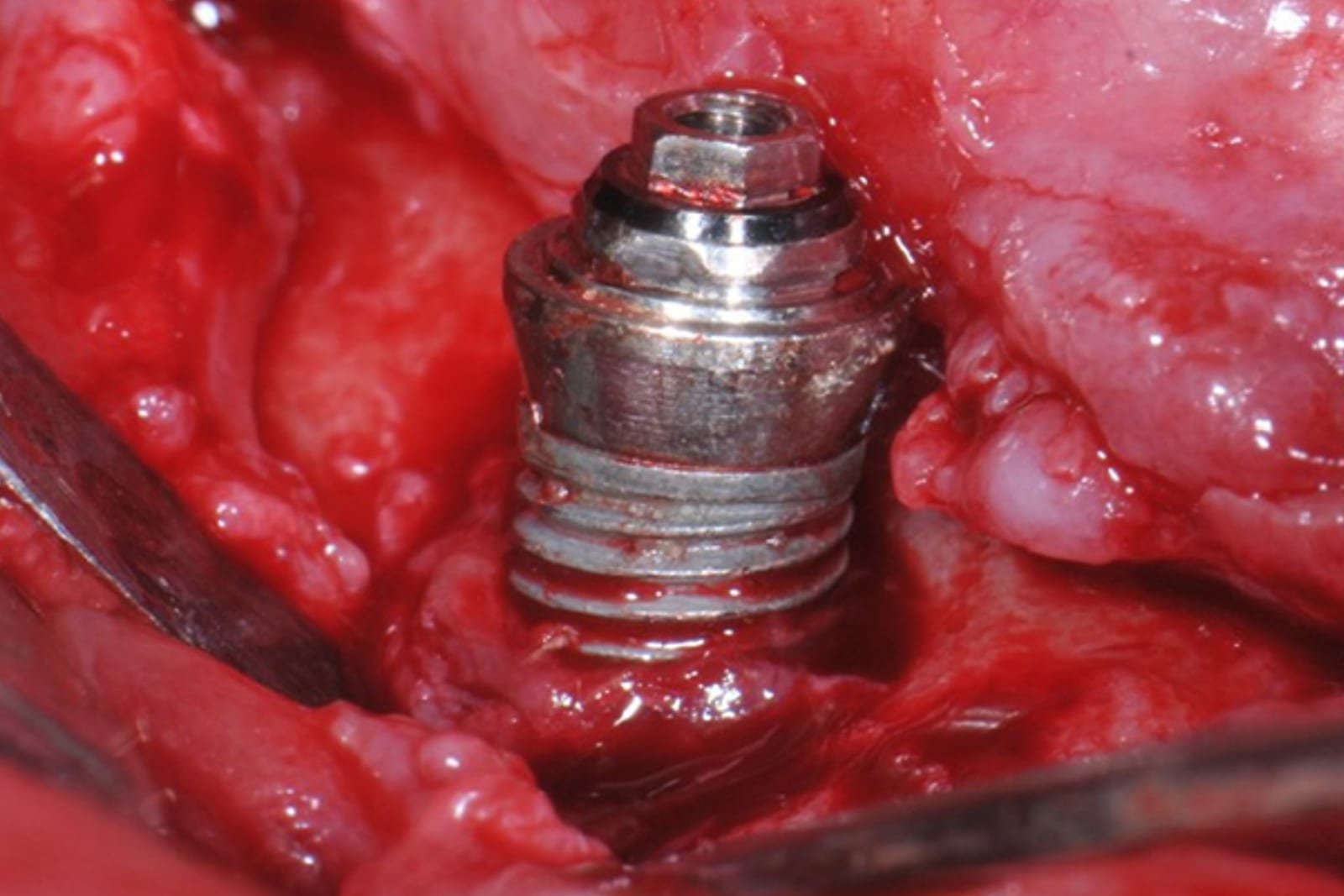
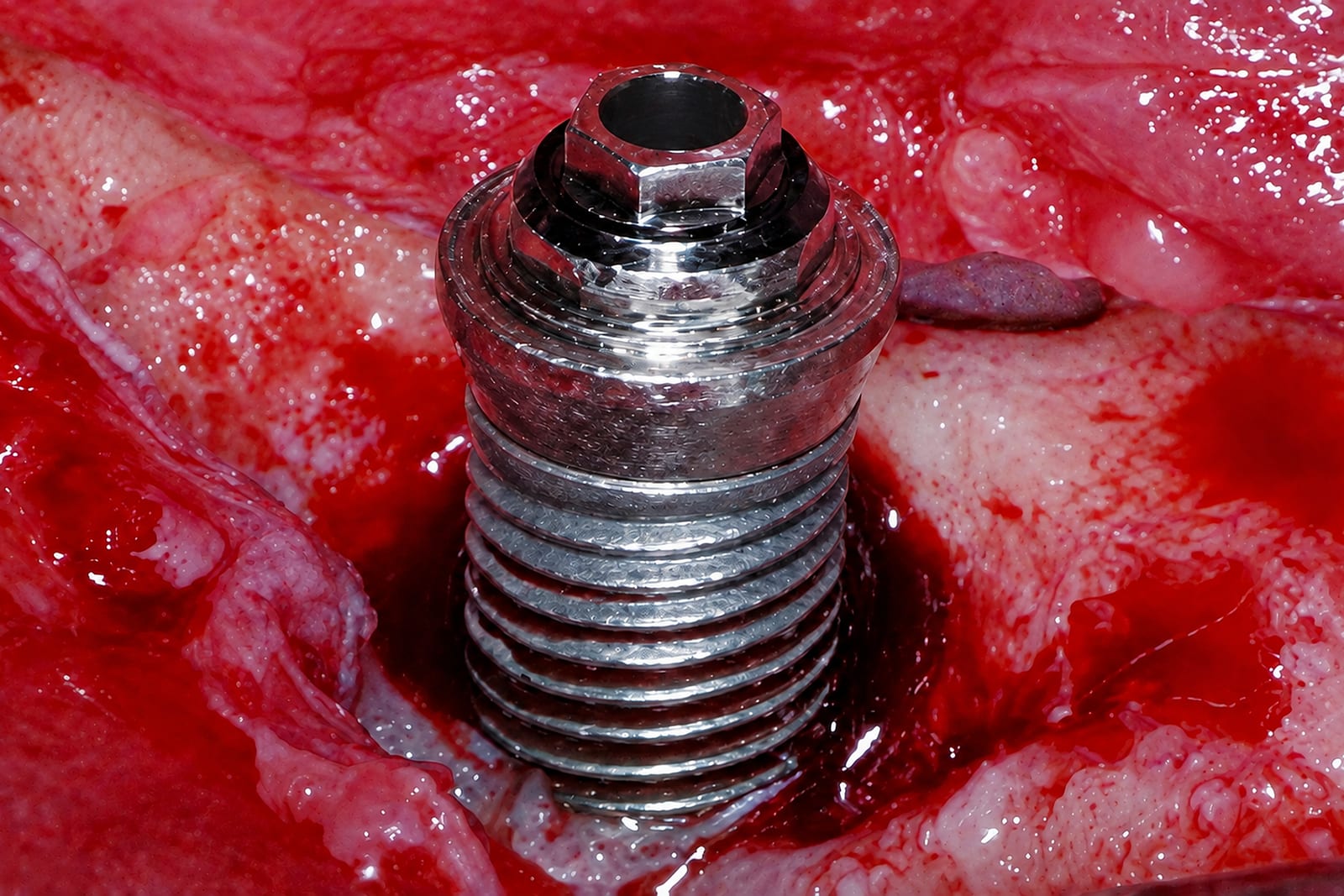
Peri-implantitis is an infection of the tissues around an implant. Once bone has been lost, the rough implant surface that was designed to hold bone is exposed to the mouth and becomes coated with bacteria. Surgery can open the site, but the surface still has to be cleaned before it can be expected to heal. Curettes and ultrasonic tips struggle in the thread valleys; a rotating brush with fine metal bristles reaches into them.

The bristle material matters. Steel is too hard and marks the implant. Plastic is too soft to clean it. Titanium alloys sit in between, and the NiTi Brush goes one step further: its bristles are nickel-titanium, a shape-memory alloy roughly three times more flexible than titanium at comparable hardness. The bristle bends into the thread instead of cutting across it, so the contaminated layer is removed while the implant geometry is preserved. Details, with the published measurements, are on the raw material page.

The four NiTi Brush models

One bristle, one drive, four head geometries. The choice follows how much of the implant is exposed and how much room there is to work.

Full specifications, motor settings and the step-by-step sequence are on the product page and the treatment protocol. More pictures, including removed implants before and after, SEM and CBCT, are in the image gallery.

What the literature says

Researchers outside HANS Korea have used the NiTi Brush as the mechanical decontamination step in published peri-implantitis studies, including multicentre randomised controlled trials. The literature page lists every paper in which the instrument is identifiable as the NiTi Brush, with the journal, the investigators and the reported outcome, and the summary page shows how the figures are counted. Papers that report merely “a titanium brush” are left out even when we have reason to believe the instrument was ours, so the list is a floor, not a census.

Names, spellings and similar devices

“Titanium brush” and “Ti brush” are generic descriptions that also cover similar devices from other manufacturers. The instrument on this site is the NiTi Brush from HANS KOREA CO.,Ltd. — NiTi for nickel-titanium — also written NiTi bur, NiTi burr, Ni-Ti brush or nickel-titanium brush, and sold in Korea as Ssakssuri. Peri-implantitis is spelled peri-implantitis, periimplantitis or peri implantitis. To be sure of the instrument, look for “HANS Korea” or “NiTi Brush” on the packaging and in the paper you are reading.

Frequently asked

Is a titanium brush the same as the NiTi Brush?

Not exactly. “Titanium brush” is the generic term for several rotating brushes from different manufacturers. The NiTi Brush is a specific instrument whose bristles are a nickel-titanium shape-memory alloy rather than pure titanium. When a paper says “titanium brush” it may or may not be the NiTi Brush; our literature list counts a study only when the instrument is identifiable as ours.

How is the brush used?

After the flap is raised and granulation tissue removed, the brush is mounted in a 20:1 implant handpiece and run over the exposed implant surface at 600-1,200 rpm with sterile saline irrigation, following the Instructions for Use. It is supplied non-sterile and is for single use. The choice of any chemical agent afterwards is the clinician's decision; the chemical adjuncts page summarises what published studies did.

Which model do I need?

NANO for the initial stage with roughly one thread exposed, POCKET for two to three threads, POCKET SHORT where the mouth opening or a posterior site limits access, and OMEGA for deep pockets. The product page has the comparison at the same scale.