
HANS Korea · Since 2010
NiTi Brush™
the titanium brush for peri-implantitis
Shape-memory nickel-titanium bristles that reach into the implant threads and debride and polish the contaminated surface — on the 20:1 handpiece you already own.
The reference instrument for mechanical decontamination — independently studied by 141 investigators at 59 institutions in 20 countries.
- CE · Class IIa
- 34 verified publications
- Authorised distributors worldwide
- Single use

The reference instrument what the field measures against
Fifteen years of continuous manufacture have put the NiTi Brush in an unusual position: it is not only sold into the field, it is the instrument other technologies are tested against.
- Named by the manufacturer in independent peer-reviewed papers — “a titanium brush (Hans Korea Co., Ltd.)”, “NiTi Brush Omega, Hans Korea”.
- Used as the mechanical baseline in multicentre randomised trials — newer decontamination technologies are evaluated on top of debridement with this instrument.
- Regulatory depth — CE Class IIa, MDR transition under way, IFU in nineteen languages, established EU authorised representative.
- Counted to a deliberately strict standard. The thirty-four publications on our Literature page are only those we have read in full, verified against the publisher's record, and in which the instrument is identifiable as the NiTi Brush from HANS Korea. Papers that report merely “a titanium brush” are not counted, even where we have reason to believe it was ours. The figure is therefore a floor; when a paper names the instrument, we add it.
Regulatory position EU MDR transition under way
| Classification | Class IIa medical device, GMDN 57955 |
|---|---|
| European Union | CE marked under the MDD; validity extended under Regulation (EU) 2023/607 to 31 December 2028 |
| MDR transition | Application filed 2024 · on-site audit conducted June 2026 · technical file review due December 2026 · certificate expected 2027 |
| United States | FDA establishment registration and device listing. |
| Japan | Registered with the Ministry of Health, Labour and Welfare (MHLW) |
Distribution, licensing and investment
Become a distributor
Open territories, the regulatory pack for your registration work, IFU in 19 languages, product training and marketing assets. Terms on enquiry.
Partnership & investment
Licensing agreements, co-development and corporate transactions — handled by management in confidence, NDA available.
Talk to us
Tell us your territory and what you have in mind. Mark partnership enquiries “Partnership” and they are handled by management in confidence.
The instrument at work 57 seconds, no sound
Surgical footage of debridement with the NiTi Brush and implantoplasty of the exposed threads, followed by the CBCT record of the same site: bone loss around the implant before, new bone after guided bone regeneration.
Choose the instrument four models, one mechanism
Shape-memory Ni-Ti bristles bend into the thread rather than cutting across it — returning a contaminated implant surface to a machined finish while preserving the original geometry of the implant. Select by the access the defect allows. All models are driven by an implant motor with a 20:1 reduction handpiece at 600–1,200 rpm. New to the instrument? Start with what a titanium brush is.
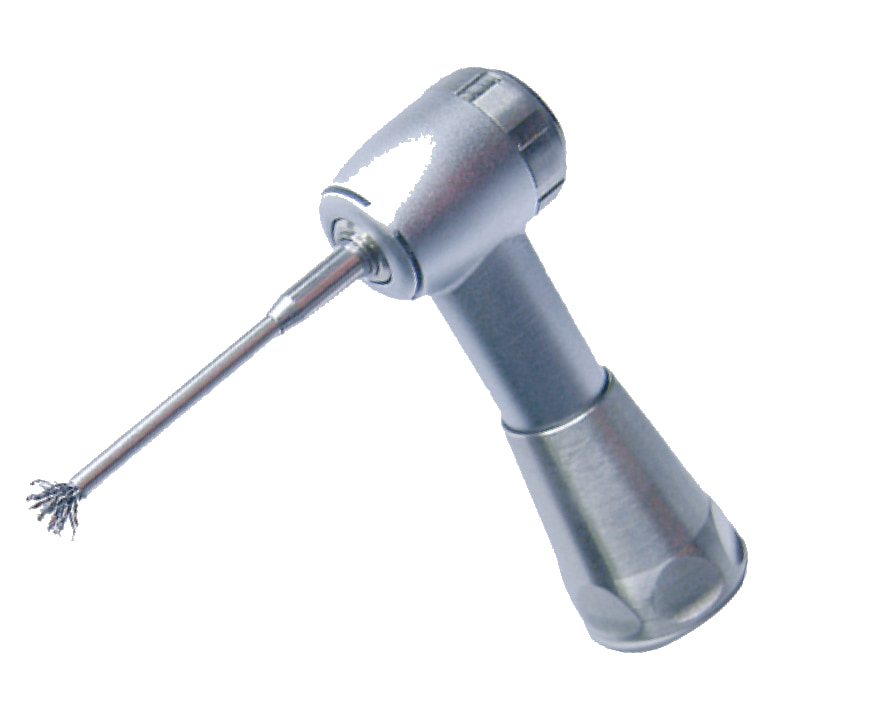
Open bristle head with effective access into the pocket. Two to three threads open.
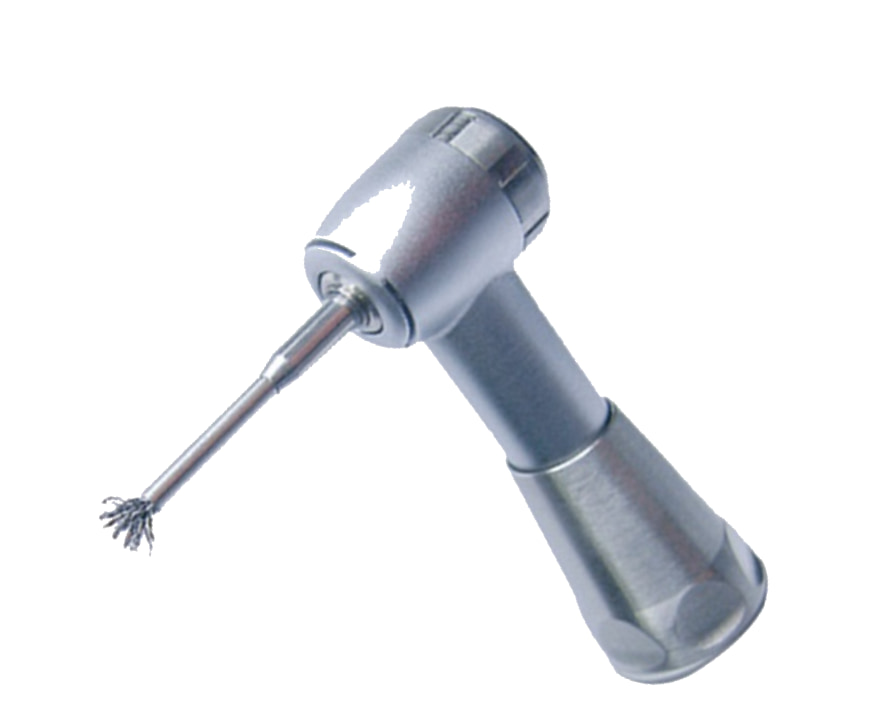
POCKET SHORT
Same performance as POCKET. Narrow posterior sites, or limited mouth opening.
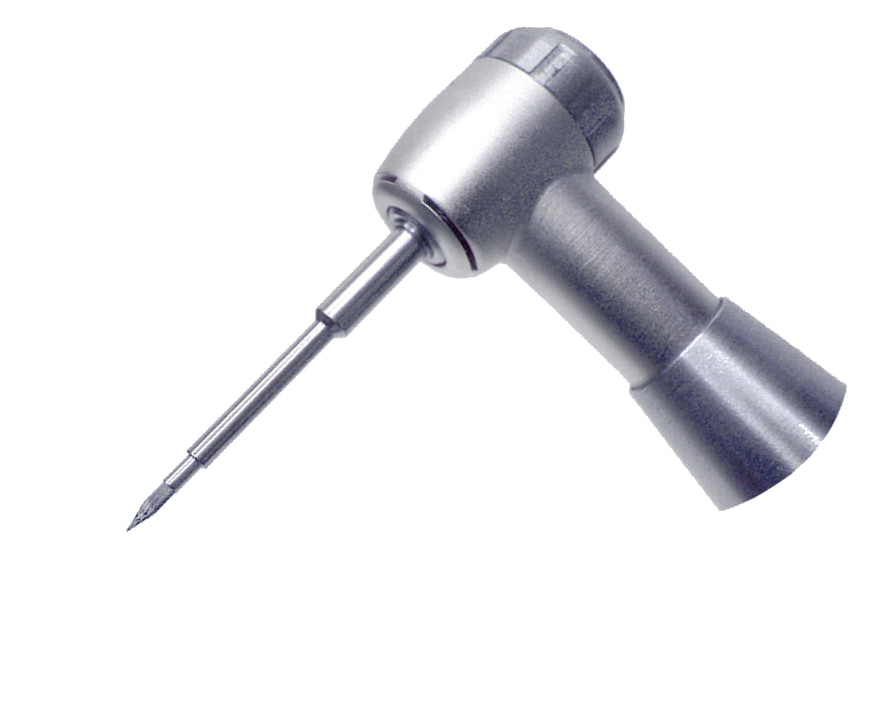
NANO
Bound, pointed tip for very targeted work. One thread open — initial-stage peri-implantitis.
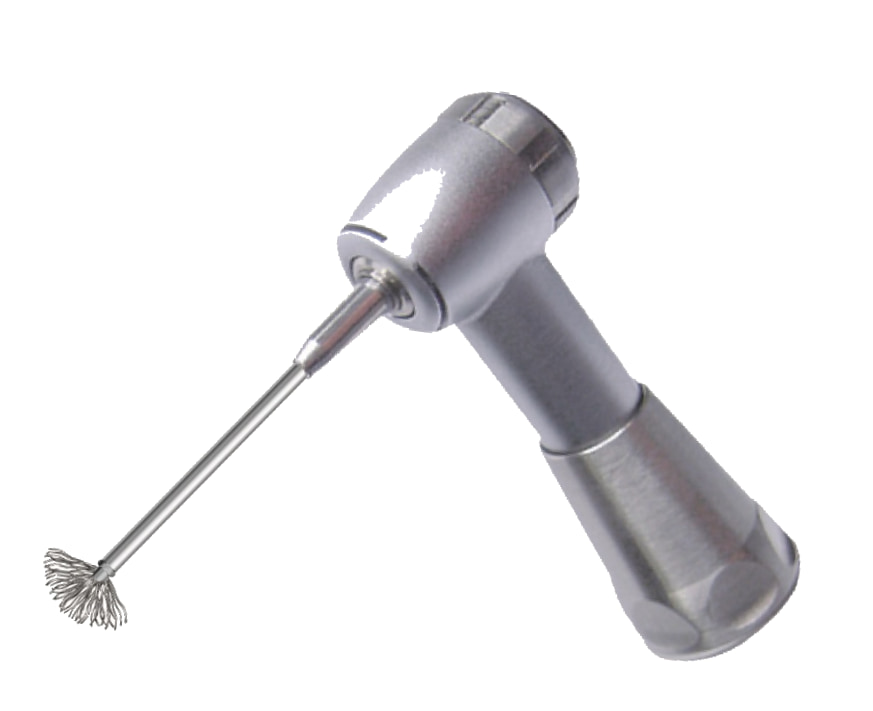
OMEGA
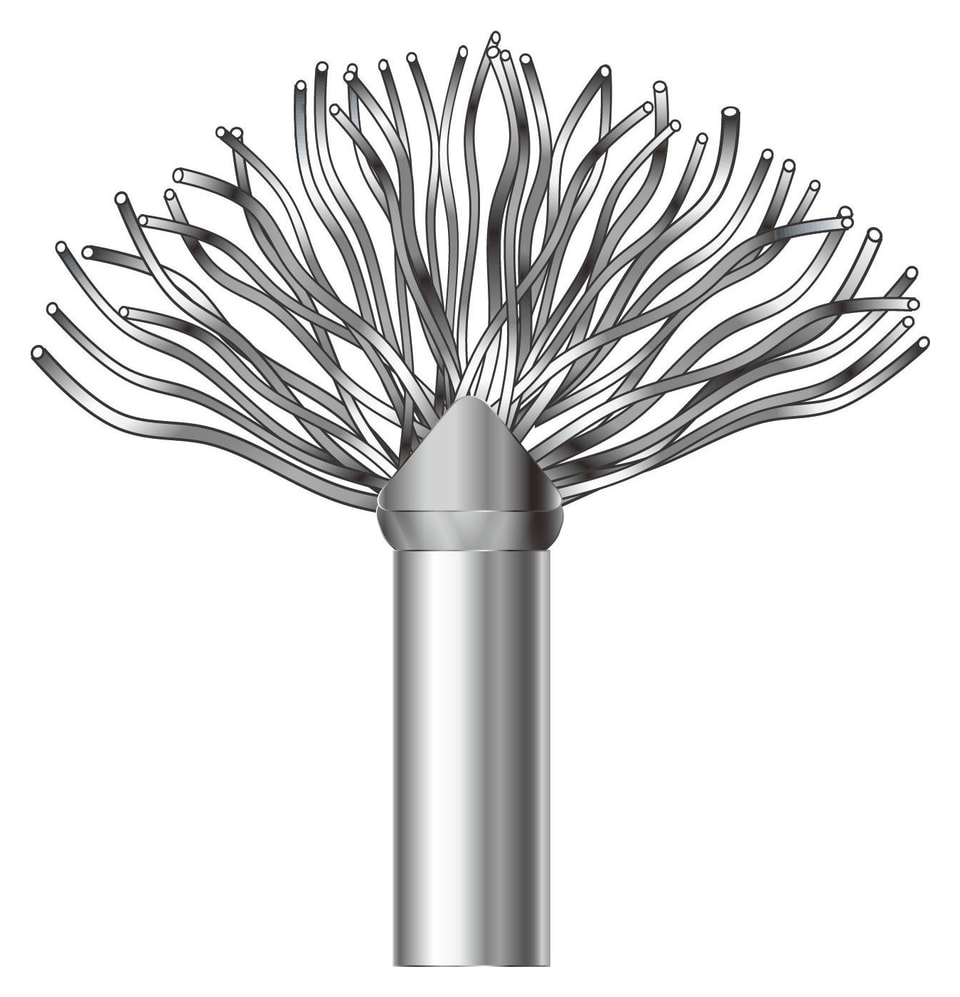
Wide splayed head that folds around the thread. Deep pocket involvement.
What it does to the surface
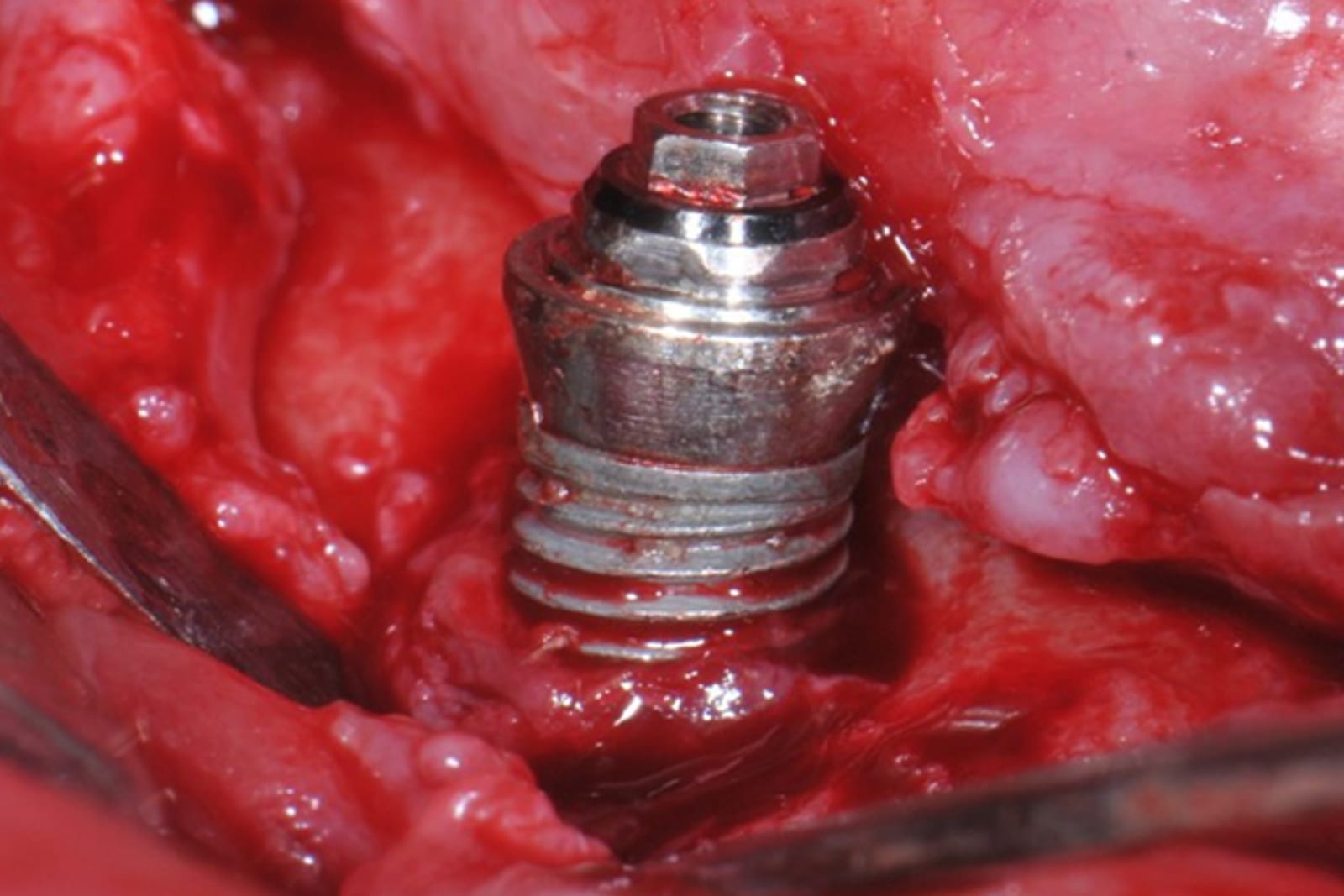
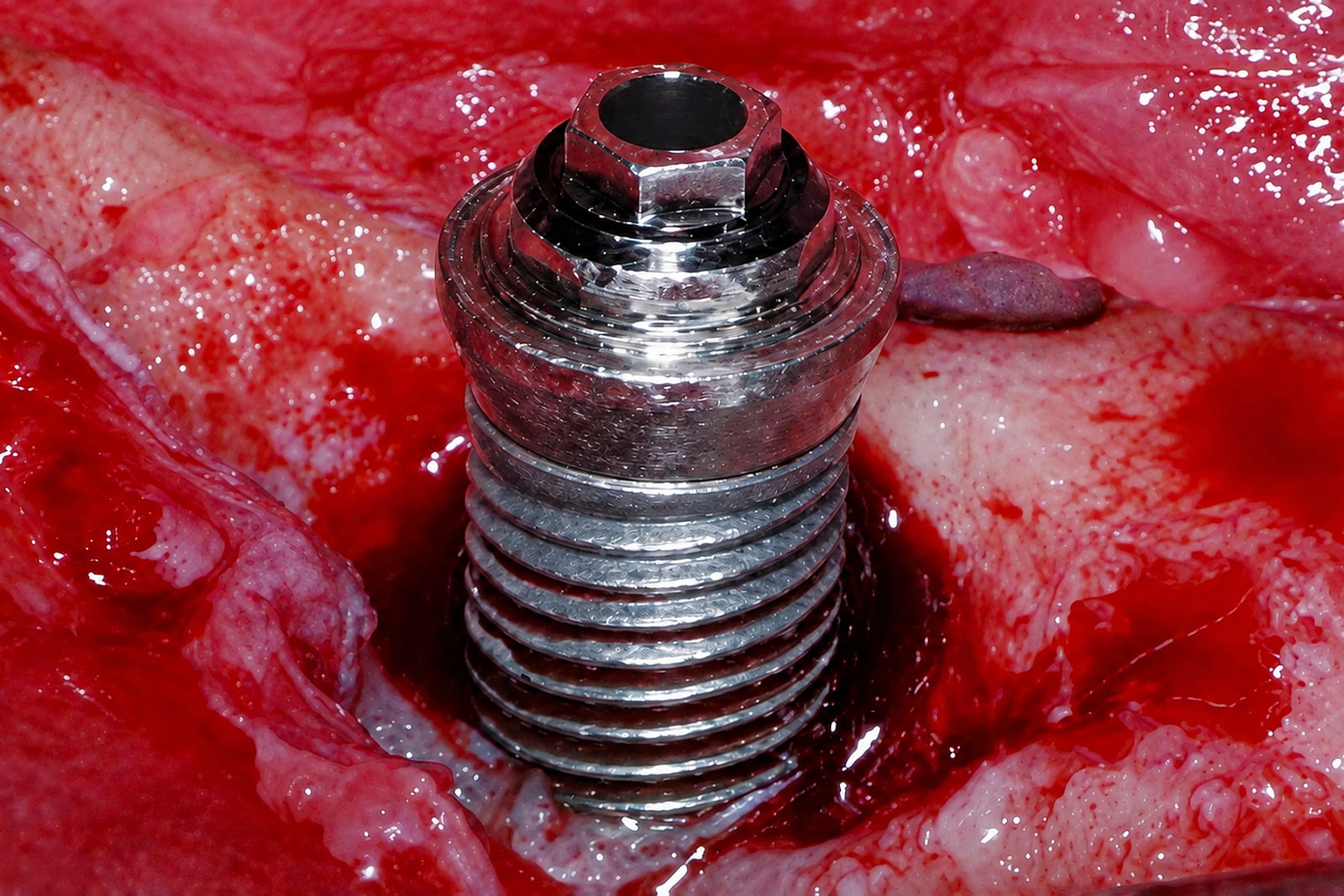
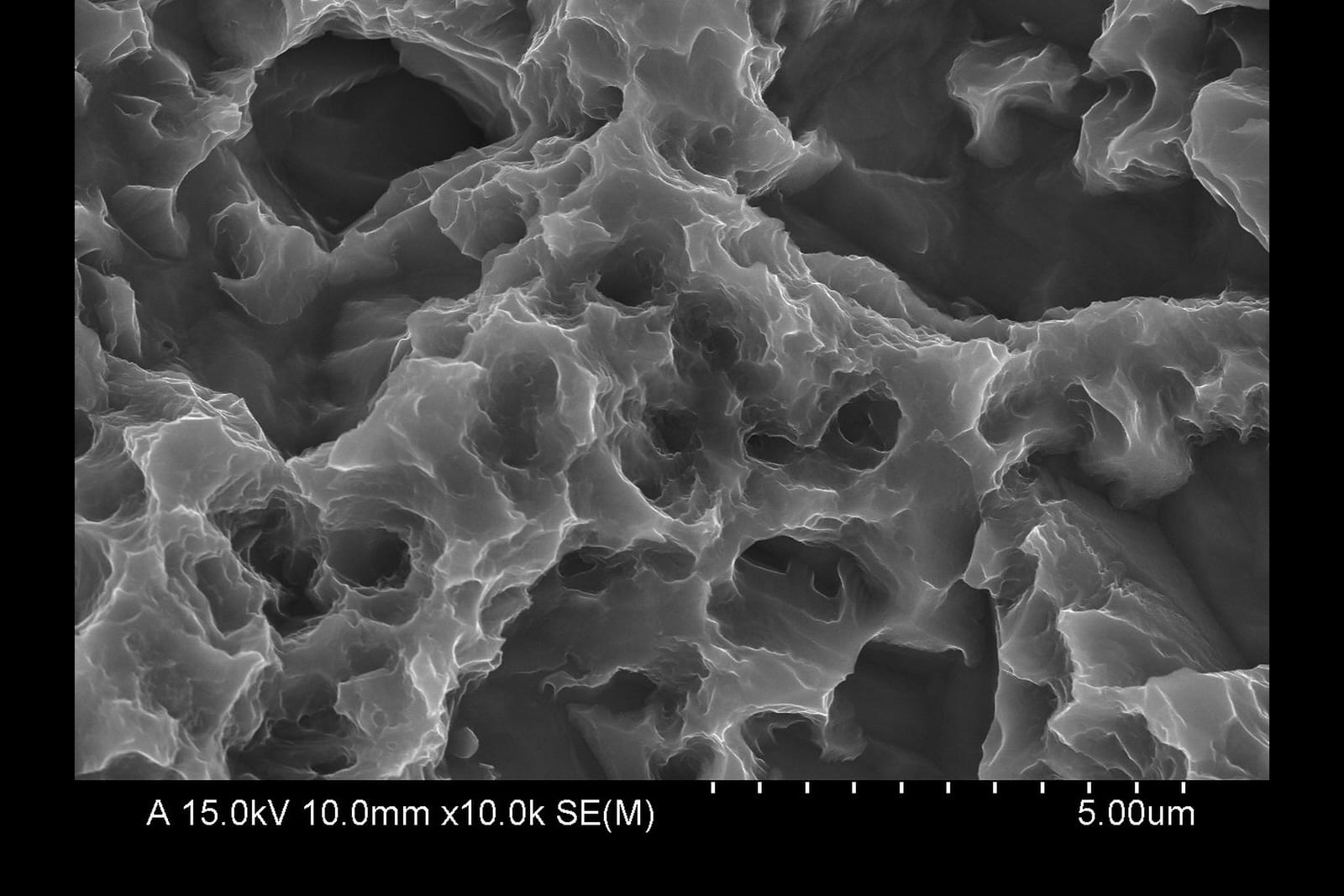
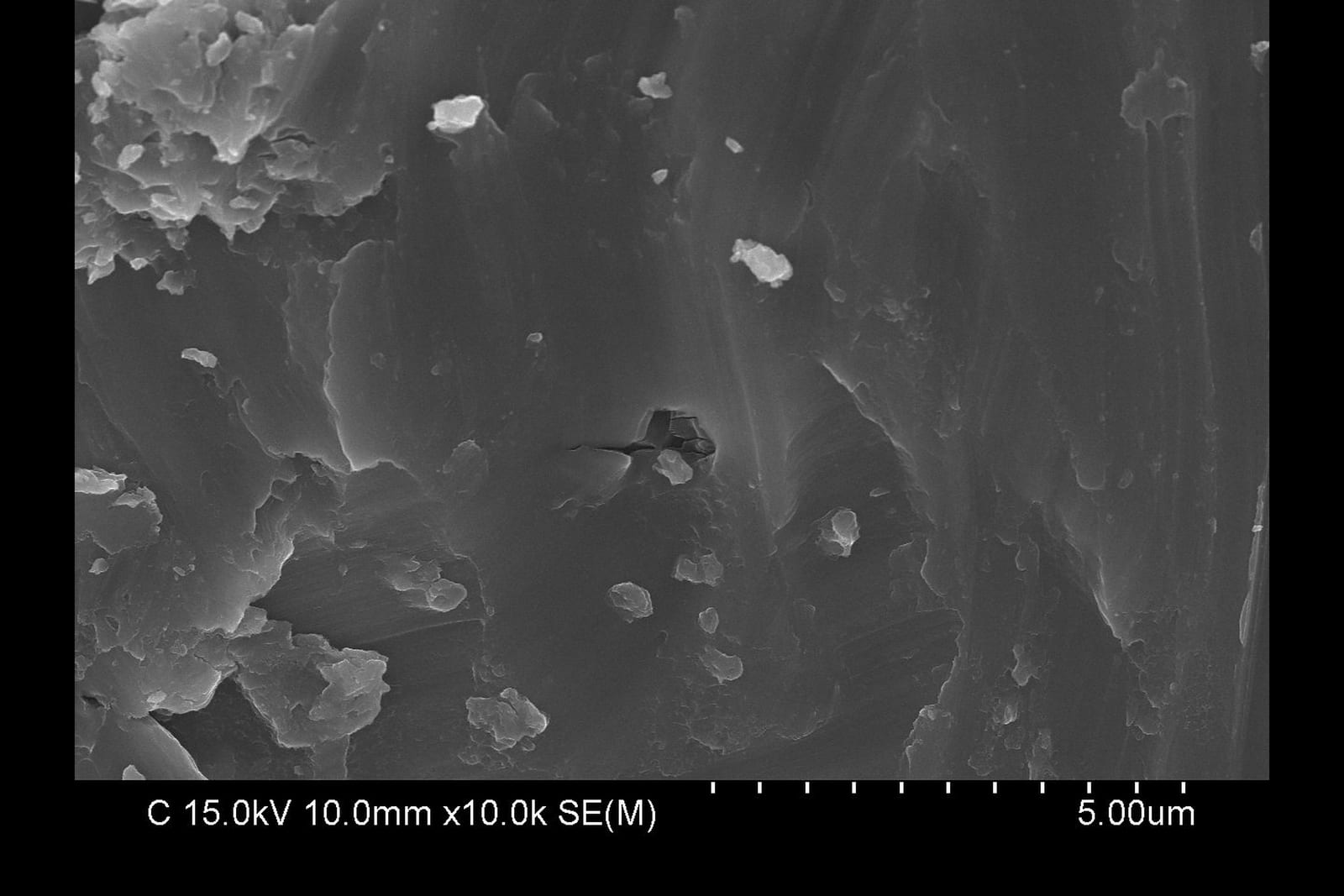
Make rough surface into machined smooth surface. Remove everything except the original shape of the implant. Chairside, the endpoint is visible: the shade of the implant changes to a bright, machined finish.
The protocol example of protocol
-
Diagnosis
Diagnose peri-implantitis and measure the depth of the pocket.
-
Select the brush
NANO for 1–2 threads exposed · POCKET for more than 2 threads · POCKET SHORT for molars.
-
Sterilise
Supplied non-sterile. Autoclave in a pouch at 134 °C for 15 minutes.
-
Rotate — debridement & decontamination
Implant motor, 600–1,200 rpm with extensive external saline, until the surface is machined and smooth.
-
Chemical treatment
Tetracycline 250 mg in 2.5 cc warm saline, applied by syringe. Wait 3 minutes, then rinse. The agent and protocol are a clinical decision — refer to the literature.
-
GBR
Guided bone regeneration follows the chemical step.
Use an implant motor — not a turbine or a straight handpiece
The NiTi Brush must be driven by an implant motor through a 20:1 reduction handpiece, run at 600–1,200 rpm with continuous external sterile saline. It is not intended for a high-speed turbine or for any drive that cannot hold this speed range.
Supplied non-sterile — autoclave at 134 °C for 15 minutes before every use. Single use only, do not reuse. This summary does not replace the Instructions for Use. Always read the IFU applicable to your market before treatment.
Published evidence
Researchers outside HANS Korea have used the instrument as the mechanical decontamination step in published studies of peri-implantitis therapy, including multicentre randomised controlled trials.
HANS Korea — the original instrument for peri-implantitis
HANS Korea has been developing the NiTi Brush since 2010 and filed its first patent for the instrument in November 2011. Every NiTi Brush since — NANO, POCKET, POCKET SHORT and OMEGA — descends from that original design.
It is a category we created and have refined for more than a decade, alongside the clinicians who use it.

About HANS Korea where the NiTi Brush came from
“In 2010, two ITI fellows and I sat in Osaka discussing peri-implantitis over sake until the early morning. That is the starting point of the NiTi Brush.”
HANS Kim
Founder, HANS KOREA CO.,Ltd.
With Prof. Dr. Baek-Soo Lee (Department of Oral and Maxillofacial Surgery,
Kyung-Hee University, Seoul) and Dr. Yasushi Nakajima, DDS, PhD, FITI (Osaka).
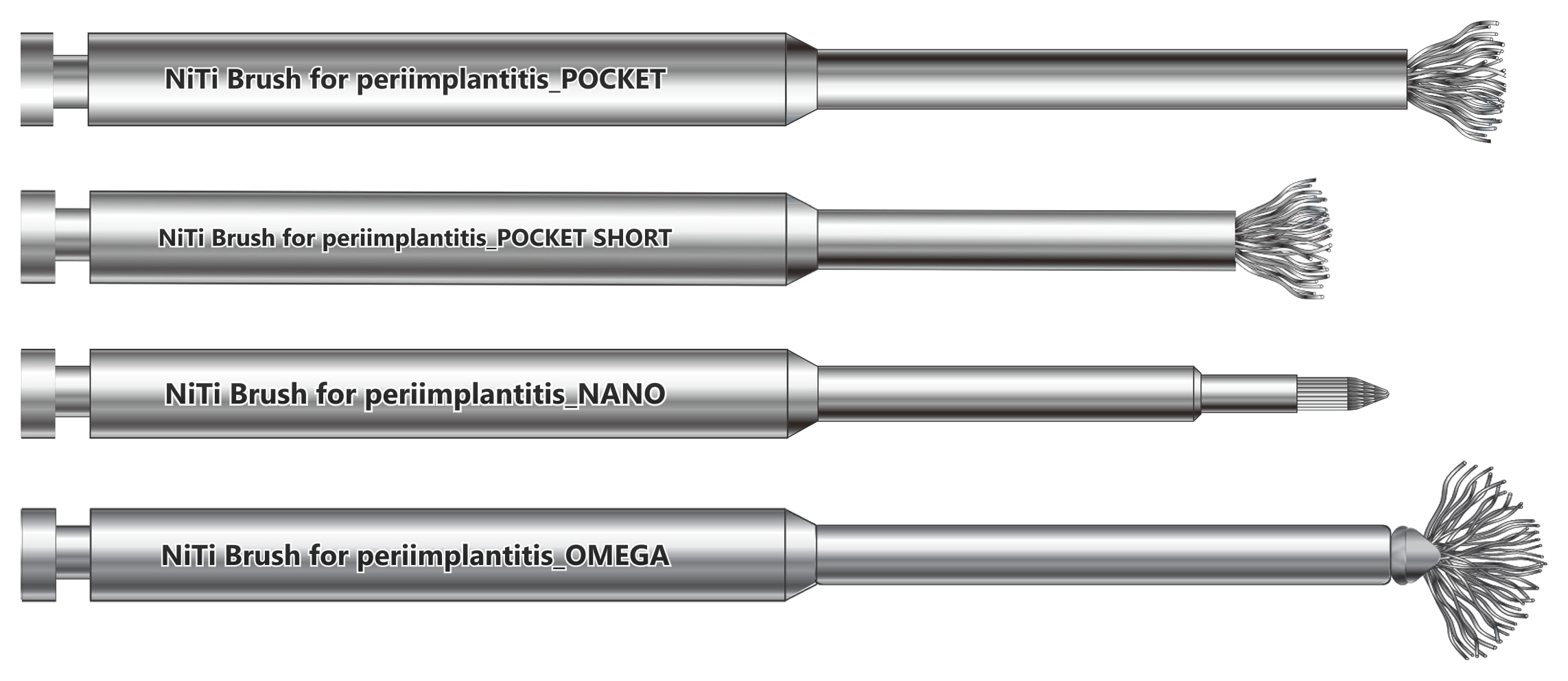
Technical illustrations. The appearance of the delivered product may differ.
The original NiTi Brush™ — how to be sure you have it
HANS Korea developed the NiTi Brush and filed its first patent application for the instrument in November 2011. Similar devices exist. They are not made to our specification, they are not covered by our documentation, and their behaviour against a titanium surface has not been evaluated in the studies cited on this site.
Buy from HANS Korea or from an authorised distributor, and check that the product you receive is a genuine NiTi Brush™.
The clinical problem
Implants have been placed at scale for three decades. The population old enough to fail grows every year, and peri-implantitis is the reason most of them do.
And removing the implant is often not an option
A single, standalone implant in a healthy patient can usually be explanted and replaced. That changes when the patient is older and carries comorbidities, or when the case rests on several implants — where even one failing implant cannot be dealt with in isolation, and a fixed bridge would have to be dismantled to reach it. In those cases the realistic path is to decontaminate the surface and keep the implant in function. Read more →